12-163-180
CD163 Monoclonal Antibody (TNKUPJ), PE, eBioscience™, Invitrogen™
Manufacturer: eBioscience
Select a Size
| Pack Size | SKU | Availability | Price |
|---|---|---|---|
| Each of 1 | 12-163-180-Each-of-1 | In Stock | ₹ 13,350.00 |
12-163-180 - Each of 1
In Stock
Quantity
1
Base Price: ₹ 13,350.00
GST (18%): ₹ 2,403.00
Total Price: ₹ 15,753.00
Antigen
CD163
Classification
Monoclonal
Concentration
0.2 mg/mL
Formulation
PBS with 0.09% sodium azide; pH 7.2
Gene Accession No.
Q2VLH6
Gene Symbols
CD163
Purification Method
Affinity chromatography
Regulatory Status
RUO
Gene ID (Entrez)
93671
Content And Storage
4° C, store in dark, DO NOT FREEZE!
Form
Liquid
Applications
Flow Cytometry
Clone
TNKUPJ
Conjugate
PE
Gene
CD163
Gene Alias
CD163; CD163 antigen; CD163 molecule; CD163v2; CD163v3; Hemoglobin scavenger receptor; M130; macrophage-associated antigen; MM130; putative CD163 antigen; SCARI1; Scavenger receptor cysteine-rich type 1 protein M130; sCD163; Soluble CD163; Soluble sCD163
Host Species
Rat
Quantity
25μg
Primary or Secondary
Primary
Target Species
Mouse
Product Type
Antibody
Isotype
IgG2a κ
Related Products


Description
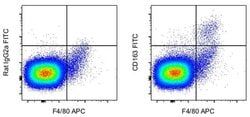
- Description: This TNKUPJ monoclonal antibody recognizes mouse CD163
- CD163 is a 130kDa surface receptor expressed by certain subsets of tissue macrophages, including splenic red pulp macrophages, Kupffer cells, intestinal lamina propria macrophages and a small fraction of peritoneal macrophages
- In contrast to human blood monocytes, mouse monocytes do not express CD163
- Also, unlike human CD163, mouse CD163 is not as readily induced by M2 polarizing cytokines, and it is not a good marker of M2 macrophages
- No common cell lines of monocytic or macrophage origin express mouse CD163
- In humans, CD163 has been shown to be proteolytically cleaved and shed from the cell surface, and it acts as a soluble anti-inflammatory factor
- This TNKUPJ antibody will detect CD163 on fixed and permeabilized cells allowing for staining of the intracellular pool of this receptor
- Although CD163 is relatively stable to collagenase digestion, aggressive tissue dissociation protocols might potentially decrease the amount of surface CD163
- In these cases intracellular detection is recommended
- Applications Reported: This TNKUPJ antibody has been reported for use in flow cytometric analysis
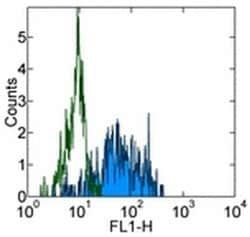
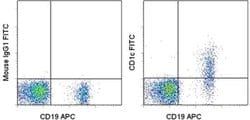
- Applications Tested: This TNKUPJ antibody has been tested by flow cytometric analysis of mouse splenocytes
- This may be used at less than or equal to 0.25 μg per test
- A test is defined as the amount (μg) of antibody that will stain a cell sample in a final volume of 100 μL
- CD163 (M130 antigen, Ber-Mac3, Ki-M8, SM4) is a 130 kDa membrane glycoprotein, a member of the scavenger receptor cysteine-rich superfamily, and a receptor for the hemoglobin-haptoglobin complex
- CD163 protects tissues from free hemoglobin-mediated oxidative damage, and may play a role in the uptake and recycling of iron, via endocytosis of hemoglobin/haptoglobin and subsequent breakdown of heme
- CD163 is expressed exclusively on the cell surface of human monocytes and macrophages that evolve predominantly in the late phase of inflammation
- Specifically, CD163 is present on all circulating monocytes and most tissue macrophages except those found in the mantle zone and germinal centers of lymphoid follicles, interdigitating reticulum cells and Langerhan's cells
- CD163 is present on all CD14 positive monocytes, most CD64 positive monocytes, and shows higher expression on CD16 positive monocytes
- CD163 is upregulated on mononuclear phagocytes by IL-10, IL-6 and dexamethasone
- Lipopolysaccharide (LPS) and phorbol myristate acetate (PMA) both induce shedding of CD163 from the cell surface into plasma or cell supernatant
- CD163 binds hemoglobin/haptoglobin complexes in a calcium-dependent and pH-dependent manner, and exhibits a higher affinity for complexes of hemoglobin and multimeric haptoglobin of HP1F phenotype than for complexes of hemoglobin and dimeric haptoglobin of HP1S phenotype
- Further, CD163 also induces a cascade of intracellular signals that involves tyrosine kinase-dependent calcium mobilization, inositol triphosphate production and secretion of IL6 and CSF1.