CD69 Monoclonal Antibody (FN50), eBioscience™, Invitrogen™
Manufacturer: Invitrogen
Select a Size
| Pack Size | SKU | Availability | Price |
|---|---|---|---|
| Each of 1 | 14-069-937-Each-of-1 | In Stock | ₹ 1,22,108.00 |
14-069-937 - Each of 1
In Stock
Quantity
1
Base Price: ₹ 1,22,108.00
GST (18%): ₹ 21,979.44
Total Price: ₹ 1,44,087.44
Antigen
CD69
Classification
Monoclonal
Concentration
0.5 mg/mL
Formulation
PBS with 0.09% sodium azide; pH 7.2
Gene Accession No.
Q07108
Gene Symbols
CD69
Purification Method
Affinity chromatography
Regulatory Status
RUO
Gene ID (Entrez)
969
Content And Storage
4° C
Form
Liquid
Applications
Flow Cytometry, Immunohistochemistry
Clone
FN50
Conjugate
Unconjugated
Gene
CD69
Gene Alias
5830438K24Rik; Activation inducer molecule; activation inducer molecule (AIM/CD69); AI452015; AIM; BL-AC/P26; CD69; CD69 antigen; CD69 antigen (p60, early T-cell activation antigen); CD69 molecule; CLEC2C; C-type lectin domain family 2 member C; C-type lectin domain family 2, member C; EA1; early activation antigen CD69; early lymphocyte activation antigen; early T-cell activation antigen p60; GP32/28; leukocyte surface antigen Leu-23; MLR-3; VEA; Very Early Activation Antigen
Host Species
Mouse
Quantity
2 mg
Primary or Secondary
Primary
Target Species
Human
Product Type
Antibody
Isotype
IgG1 κ
Related Products


Description
- Description: The FN50 monoclonal antibody reacts with human CD69, also known as very early activation antigen (VEA)
- CD69 is approximately 30 kDa and is expressed on the cell-surface as a disulfide-linked dimer
- CD69 is rapidly upregulated upon activation and expressed on lymphocytes, monocytes and platelets
- Applications Reported: The FN50 antibody has been reported for use in flow cytometric analysis and immunohistochemical staining
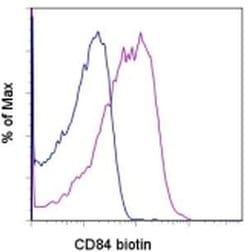
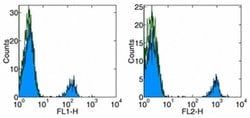
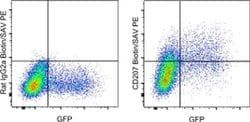
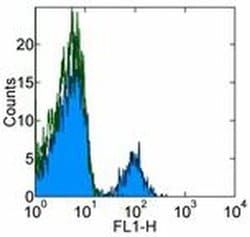
- Applications Tested: The FN50 antibody has been tested by flow cytometric analysis of resting and 6-hour TPA-activated human normal human peripheral blood cells
- This can be used at less than or equal to 0.5 μg per test
- A test is defined as the amount (μg) of antibody that will stain a cell sample in a final volume of 100 μL
- Cell number should be determined empirically but can range from 10^5 to 10^8 cells/test
- It is recommended that the antibody be carefully titrated for optimal performance in the assay of interest
- Purity: Greater than 90%, as determined by SDS-PAGE
- Aggregation: Less than 10%, as determined by HPLC
- Filtration: 0.2 μm post-manufacturing filtered
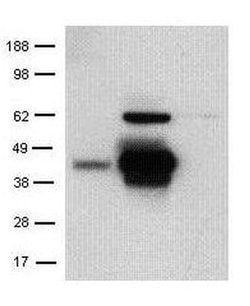
- CD69 (AIM, Active Inducer Molecule) is a gp28/34 disulfide bonded homodimer with a molecular weight of 60 kDa under non-reducing conditions
- CD69 contains one or two N linked oligosacaride and the molecule is present on activated platelets
- In normal peripheral blood a variable percentage of cells express the CD69 antigen, and it is involved in lymphocyte signal transduction
- Expression CD69 is induced upon activation of T lymphocytes, and may play a role in proliferation
- Furthermore, the protein may act to transmit signals in natural killer cells and platelets
- Alternative splicing results in multiple transcript variants of CD69
- Diseases associated with CD69 dysfunction include coccidiodomycosis and asthma.