16-992-482
TLR4/MD-2 Complex Monoclonal Antibody (MTS510), Functional Grade, eBioscience™, Invitrogen™
Manufacturer: Invitrogen
Select a Size
| Pack Size | SKU | Availability | Price |
|---|---|---|---|
| Each of 1 | 16-992-482-Each-of-1 | In Stock | ₹ 33,642.00 |
16-992-482 - Each of 1
In Stock
Quantity
1
Base Price: ₹ 33,642.00
GST (18%): ₹ 6,055.56
Total Price: ₹ 39,697.56
Antigen
TLR4/MD-2 Complex
Classification
Monoclonal
Concentration
1 mg/mL
Formulation
PBS with no preservative; pH 7.2
Gene Accession No.
Q9JHF9, Q9QUK6
Gene Symbols
Ly96, Tlr4
Purification Method
Affinity chromatography
Regulatory Status
RUO
Gene ID (Entrez)
17087, 21898
Content And Storage
4° C
Form
Liquid
Applications
Flow Cytometry, Functional Assay, Neutralization
Clone
MTS510
Conjugate
Functional Grade
Gene
Ly96
Gene Alias
ARMD10; CD284; Esop1; ESOP-1; hToll; lipopolysaccharide response; Lps; Ly87; Ly96; Ly-96; Lymphocyte antigen 96; Md2; MD-2; myeloid differentiation factor-2; myeloid differentiation protein-2; protein MD-2; Ran/M1; Rasl2-8; Tlr4; TLR-4; TOLL; Toll-like receptor 4
Host Species
Rat
Quantity
100 μg
Primary or Secondary
Primary
Target Species
Mouse
Product Type
Antibody
Isotype
IgG2a κ
Related Products



Description
- Description: The MTS510 monoclonal antibody reacts with the mouse Toll-like receptor 4 (TLR4)/MD-2 complex
- At least ten members of the Toll family have been identified
- This family of type I transmembrane proteins is characterized by an extracellular domain with leucine-rich repeats and a cytoplasmic domain with homology to the type I IL-1 receptor
- Two of these receptors, TLR2 and TLR4, are pattern recognition receptors and signaling molecules in response to bacterial lipoproteins and have been implicated in innate immunity and inflammation
- TLR4 physically associates with MD-2, and together with CD14, this complex is responsible for LPS recognition and signaling
- In the mouse, TLR4 is expressed by thioglycolate-elicited peritoneal macrophages
- Incubation of peritoneal macrophages with LPS results in down regulation of surface TLR4/MD-2
- The TLR4 gene is defective in C3H/HeJ and C57BL/10ScCr mice, both of which have been well characterized as hyporesponders to LPS
- The MTS510 monoclonal antibody co-immunoprecipitates MD-2 (∽30 kDa) and TLR4 (∽100 kDa), and preferentially reacts with TLR4 that is associated with MD-2
- In comparison, binding of the UT41 monoclonal antibody occurs with and without formation of the TLR4/MD-2 complex
- Please contact eBioscience Technical Support for further information
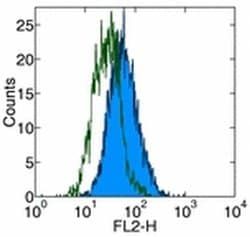
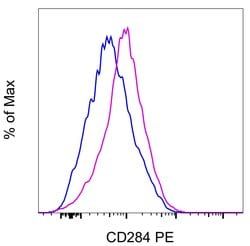
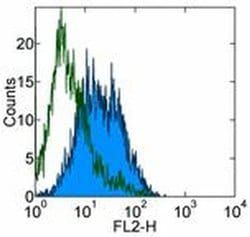
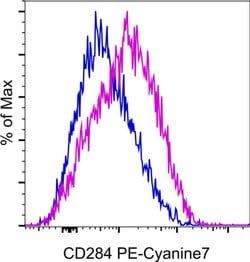
- Applications Reported: MTS510 has been reported for use in flow cytometric analysis and inhibition of LPS-induced cytokine production
- MD-2 is a member of the Toll/interleukin-1 receptor (TIR) family, a group of proteins that include the Toll-like receptors (TLRs)
- TLRs are signaling molecules that recognize different pathogen-associated molecular patterns (PAMPs) and serve as an important link between the innate and adaptive immune responses
- TLR4, the major signaling receptor for lipopolysaccharide (LPS), requires the binding of MD-2 to its extracellular region for maximal response to LPS
- The specificity of this response is determined by the species of MD-2; e.g., human MD-2 transfected into mouse cells can cause mouse TLR4 to react to LPS analogs that are normally antagonistic to human but not mouse TLR4.