CD22 Monoclonal Antibody (C2), Invitrogen™
Mouse Monoclonal Antibody
Manufacturer: Fischer Scientific
The price for this product is unavailable. Please request a quote
Antigen
CD22
Concentration
1 mg/mL
Classification
Monoclonal
Form
Liquid
Regulatory Status
RUO
Formulation
PBS with 50% glycerol and 0.05% Proclin 300, pH 7.4
Gene Alias
A530093D23, B-cell receptor CD22, BL-CAM, B-lymphocyte cell adhesion molecule, B-lymphocyte cell adhesion molecule (BL-CAM), Cd22, CD22 antigen, CD22 molecule, FLJ22814, Lectin 2, Leu-14, Lyb8, Lyb-8, MGC130020, sialic acid binding Ig-like lectin 2, sialic acid-binding Ig-like lectin 2, Sialic acid-binding Ig-like lectin 2 (Siglec-2), Siglec2, Siglec-2, T-cell surface antigen Leu-14
Gene Symbols
CD22
Isotype
IgG1 κ
Purification Method
Protein A/G
Gene
CD22
Clone
C2
Applications
Immunocytochemistry, Immunohistochemistry (Paraffin), Western Blot
Conjugate
Unconjugated
Host Species
Mouse
Target Species
Human
Gene Accession No.
P20273
Gene ID (Entrez)
933
Immunogen
Recombinant Human CD22 protein, His28-Ile246 (Accession #P20273)
Primary or Secondary
Primary
Content And Storage
Store at 4°C short term. For long term storage, store at -20°C, avoiding freeze/thaw cycles.
Related Products

Description
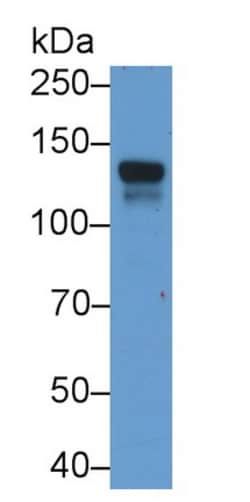
- CD22 (BL-CAM) is a type 1 integral membrane glycoprotein with molecular weight of 130 to 140 kDa
- CD22 is expressed in both the cytoplasm and cell membrane of B-lymphocytes
- CD22 antigen appears early in B-cell lymphocyte differentiation at approximately the same stage as the CD19 antigen
- Unlike other B-cell markers, CD22 membrane expression is limited to the late differentiation stages comprised between mature B cells (CD22+) and plasma cells (CD22-), and may thus prove useful in phenotyping mature leukemias
- CD22 is also strongly expressed in hairy cell leukemia
- CD22 preferentially binds to alpha2,6-linked sialic acid
- The sialic acid recognition site can be masked by cis interactions with sialic acids on the same cell surface
- Upon ligand induced tyrosine phosphorylation in the immune response seems to be involved in regulation of B cell antigen receptor signaling
- CD22 plays a role in positive regulation through interaction with Src family tyrosine kinases and may also act as an inhibitory receptor by recruiting cytoplasmic phosphatases via their SH2 domains that block signal transduction through dephosphorylation of signaling molecules
- CD22 is also strongly expressed in hairy cell leukemia
- CD22 is also positive in diffuse large B-cell lymphoma and nodular lymphocyte predominance Hodgkin’s lymphoma, but negative in classical Hodgkin’s lymphoma.