200064178
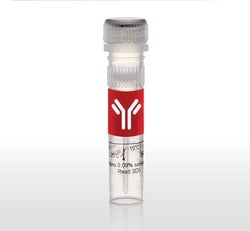
mCherry Recombinant Rat Monoclonal Antibody (16D7), HRP, Invitrogen™
Rat Recombinant Monoclonal Antibody
Manufacturer: Fischer Scientific
The price for this product is unavailable. Please request a quote
Antigen
mCherry
Concentration
1.0 mg/mL
Classification
Recombinant Monoclonal
Form
Liquid
Regulatory Status
RUO
Formulation
PBS with proprietary stabilizer and proprietary preservative; pH 7.4
Immunogen
full-length protein mCherry
Primary or Secondary
Primary
Content And Storage
-20° C, Avoid Freeze/Thaw Cycles
Clone
16D7
Applications
Western Blot
Conjugate
HRP
Host Species
Rat
Target Species
Tag
Gene Alias
mCherry
Isotype
IgG2a
Purification Method
Protein G
Product Type
Antibody
Related Products



Description
- mCherry Recombinant Monoclonal antibody specifically detects mCherry in Tag samples
- It is validated for Western Blot mCherry recombinant rat monoclonal antibody conjugated with HRP specifically recognizes mCherry at both C and N-terminus of proteins
- Recombinant rat monoclonal antibodies are produced using in vitro expression systems
- Recombinant antibodies are produced using specific genes that code for the desired antibodies
- These genes are cloned into an expression vector and expressed in vitro
- The advantages of recombinant antibodies include better specificity and lot-to-lot consistency
- It is recommended that the antibody be carefully titrated for optimal performance in the assay of interest.