22-158-013
Murine anti-PON1, Clone: KRJ2, ZeptoMetrix
Manufacturer: Fischer Scientific
Select a Size
| Pack Size | SKU | Availability | Price |
|---|---|---|---|
| Each of 1 | 22-158-013-Each-of-1 | In Stock | ₹ 36,579.00 |
22-158-013 - Each of 1
In Stock
Quantity
1
Base Price: ₹ 36,579.00
GST (18%): ₹ 6,584.22
Total Price: ₹ 43,163.22
Antigen
PON1
Classification
Monoclonal
Conjugate
Unconjugated
Host Species
Mouse
Purification Method
Affinity Purified
Regulatory Status
RUO
Target Species
Human
Isotype
IgG1
Applications
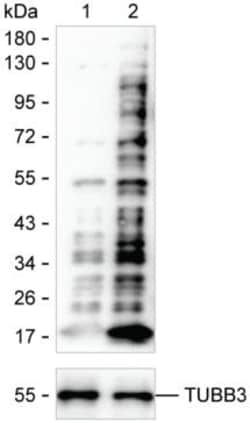
Western Blot
Clone
KRJ2
Formulation
100μg in PBS. No preservatives added.
Immunogen
Recombinant human PON1 produced in E. coli
Quantity
100 μg
Primary or Secondary
Primary
Content And Storage
Store at −10°C or below. Avoid freeze/thaw cycles. Thawed material may be stored at 4°C for short-term use.
Related Products
Description
- PON1 (arylesterase/paraoxonase) is a polymorphic enzyme closely associated with high-density lipoproteins (HDL)
- It is located on chromosome 7 along with 2 other paraoxanase genes, PON2 and PON3
- It is a 355 amino acid, 43kDa glycoprotein produced in the liver and secreted into the bloodstream
- Gene polymorphisms occur in both coding and non-coding regions
- Two major polymorphisms in the coding region are L55M and Q192R
- Q192R polymorphisms result in three major functional phenotypes Q/Q, Q/R and RR
- PON1 hydrolyses organophosphates and prevents the oxidation of low-density lipoproteins (LDL)
- It may inhibit the progression of atherosclerosis by inhibition of LDL oxidation
- Levels of PON1 in serum vary among individuals and are decreased in chronic renal failure, liver cirrhosis, diabetes, peripheral neuropathy, and familial hypercholesterolemia.