CD204 Monoclonal Antibody (PSL204), PE-Cyanine7, eBioscience™, Invitrogen™
Manufacturer: Invitrogen
Select a Size
| Pack Size | SKU | Availability | Price |
|---|---|---|---|
| Each | 25204542-Each | In Stock | ₹ 32,097.85 |
25204542 - Each
In Stock
Quantity
1
Base Price: ₹ 32,097.85
GST (18%): ₹ 5,777.613
Total Price: ₹ 37,875.463
Antigen
CD204
Classification
Monoclonal
Concentration
5 μL/Test
Formulation
PBS with 0.2% BSA and 0.09% sodium azide
Gene Accession No.
P21757
Gene Symbols
MSR1
Purification Method
Affinity chromatography
Regulatory Status
RUO
Gene ID (Entrez)
4481
Content And Storage
4° C, store in dark, DO NOT FREEZE!
Form
Liquid
Applications
Flow Cytometry
Clone
PSL204
Conjugate
PE-Cyanine7
Gene
MSR1
Gene Alias
bovine scavenger receptor type II; CD204; Macrophage acetylated LDL receptor I and II; macrophage scavenger receptor 1; macrophage scavenger receptor type III; macrophage scavenger receptor types I and II; MRS-A; MSR; Msr1; MSR-A; phSR1; phSR2; RGD1564316; SCARA1; Scavenger receptor class A member 1; scavenger receptor class A, member 1; scavenger receptor type A; scavenger receptor type I; Scvr; SRA; SR-A; SR-AI; SR-AI/II; SR-AII
Host Species
Mouse
Quantity
100 Tests
Primary or Secondary
Primary
Target Species
Human
Product Type
Antibody
Isotype
IgG1 κ
Related Products
Description
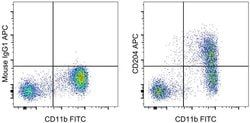
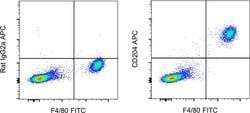
- This monoclonal antibody PSL204 reacts with human CD204, also known as Macrophage Scavenger Receptor 1 (MSR1), Scavenger Receptor Type A (SR-A), or SCARA1
- It is expressed by multiple populations of macrophages and dendritic cells
- CD204 belongs to the class A family of scavenger receptors, a group of five homotrimetric transmembrane proteins that contain a short cytoplasmic tail and extracellular C -terminus
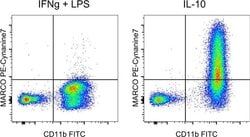
- Other members of this family include: MARCO (SCARA2), CSR (SCARA3), SRCL (SCARA4) and SCARA5
- CD204 binds and internalizes oxidized low density lipoproteins (LDL), which drives macrophage differentiation into foam cells, secretion of inflammatory cytokines, and development of atherosclerotic lesions
- In addition to oxidized LDL, CD204 binds and uptakes a wide variety of macromolecules, including bacterial cell wall components, viral DNA, calciprotein complexes, apoptotic cells, and beta-amyloid fibrils
- This broad binding specificity implicates CD204-expressing macrophages in a number of physiological processes and pathologies, such as host defense, inflammation, bone remodeling, atherosclerosis, sepsis, and Alzheimer's disease
- In humans, CD204 exists as 3 splice variants
- The more ubiquitous full length isoform (type I, SR-AI), a shorter isoform (type II, SR-AII) that lacks the C-terminal cysteine-rich domain, and the shortest isoform (type III, SR-AIII)
- CD204 gene encodes the class A macrophage scavenger receptors, which include three different types (1, 2, 3) generated by alternative splicing of this gene
- These receptors or isoforms are macrophage-specific trimeric integral membrane glycoproteins and have been implicated in many macrophage-associated physiological and pathological processes including atherosclerosis, Alzheimer's disease, and host defense
- The isoforms type 1 and type 2 are functional receptors and are able to mediate the endocytosis of modified low density lipoproteins (LDLs)
- The isoform type 3 does not internalize modified LDL (acetyl-LDL) despite having the domain shown to mediate this function in the types 1 and 2 isoforms
- It has an altered intracellular processing and is trapped within the endoplasmic reticulum, making it unable to perform endocytosis
- The isoform type 3 can inhibit the function of isoforms type 1 and type 2 when co-expressed, indicating a dominant negative effect and suggesting a mechanism for regulation of scavenger receptor activity in macrophages
- Diseases associated with MSR1 include Barrett Esophagus and Prostate Cancer.