MERTK Monoclonal Antibody (DS5MMER), Brilliant Ultra Violet™ 805, eBioscience™, Invitrogen™
Manufacturer: Invitrogen
Select a Size
| Pack Size | SKU | Availability | Price |
|---|---|---|---|
| Each | 36-857-5182-Each | In Stock | ₹ 31,118.85 |
36-857-5182 - Each
In Stock
Quantity
1
Base Price: ₹ 31,118.85
GST (18%): ₹ 5,601.393
Total Price: ₹ 36,720.243
Antigen
MERTK
Classification
Monoclonal
Concentration
0.2 mg/mL
Formulation
PBS with BSA and 0.09% sodium azide; pH 7.2
Gene Accession No.
Q60805
Gene Symbols
Mertk
Immunogen
FC-tagged full protein expressed in insect cells
Quantity
100 μg
Primary or Secondary
Primary
Target Species
Mouse
Product Type
Antibody
Isotype
IgG2a κ
Applications
Flow Cytometry
Clone
DS5MMER
Conjugate
Brilliant Ultraviolet 805
Gene
Mertk
Gene Alias
c-Eyk; c-mer; c-mer proto-oncogene tyrosine kinase; Eyk; MER; MER proto-oncogene, tyrosine kinase; MER receptor tyrosine kinase; MERTK; MGC133349; nmf12; Nyk; Proto-oncogene c-Mer; proto-oncogene tyrosine-protein kinase MER; rdy; receptor tyrosine kinase MerTK; Receptor tyrosine tinase gene probably the gene for Rdy; retinal dystrophy; RP38; sMER; sMERTK; soluble MER; soluble MERTK; STK kinase; Tyro 12; Tyro12; Tyrosine-protein kinase Mer
Host Species
Rat
Purification Method
Affinity chromatography
Regulatory Status
RUO
Gene ID (Entrez)
17289
Content And Storage
4° C, store in dark, DO NOT FREEZE!
Form
Liquid
Related Products

Description
- This DS5MMER monoclonal antibody recognizes mouse MerTK, a 170-210 kDa member of the TAM family of tyrosine kinase receptors that also includes Axl and Tyro3
- MerTK is expressed on tissue macrophages and is involved in the removal of apoptotic cells
- This process relies on two soluble ligands of MerTK, Protein S and Gas6 that bind to phosphatidylserine found on the outer leaflet of the plasma membrane of cells undergoing apoptosis
- Upon binding these ligands, MerTK undergoes autophosphorylation at multiple tyrosine residues that activate the PI3K and Akt pathways
- This results in the phagocytosis of apoptotic cells and also results in the direct inhibition of TLR-induced production of pro-inflammatory cytokines
- In addition MerTK may function as a putative entry receptor for filoviruses
- Deficiency of MerTK causes general autoimmunity, inflammation and accumulation of apoptotic bodies
- MerTK is constitutively released from the cell surface by metalloproteinases and thus is present in the serum and culture medium
- This process can be enhanced by stimulation with LPS
- MerTK can be used to help discriminate macrophages from dendritic cells
- MerTK is often expressed on malignant cells and may be implicated in immune evasion
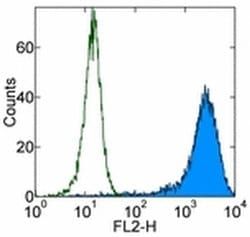
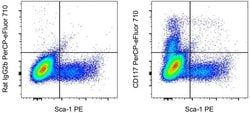
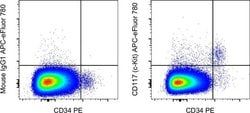
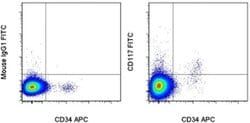
- This DS5MMER antibody has been tested by flow cytometric analysis of mouse resident peritoneal macrophages
- This may be used at ≤1 μg per test
- Cell number can range from 10^5 to 10^8 cells/test
- BUV 805 is a tandem dye that emits at 797 nm
- MERTK (cMER) is a tyrosine kinase proto-oncogene and is involved in the retinal pigment epithelium (RPE) phagocytosis pathway, which is implicated in human retinal disease
- Regulates many physiological processes including cell survival, migration, differentiation, and phagocytosis of apoptotic cells (efferocytosis)
- Ligand binding at the cell surface induces autophosphorylation of MERTK on its intracellular domain that provides docking sites for downstream signaling molecules
- Following activation by ligand, interacts with GRB2 or PLCG2 and induces phosphorylation of MAPK1, MAPK2, FAK/PTK2 or RAC1
- MERTK signaling plays a role in various processes such as macrophage clearance of apoptotic cells, platelet aggregation, cytoskeleton reorganization and engulfment
- Functions in the retinal pigment epithelium (RPE) as a regulator of rod outer segments fragments phagocytosis
- Plays also an important role in inhibition of Toll-like receptors (TLRs)-mediated innate immune response by activating STAT1, which selectively induces production of suppressors of cytokine signaling SOCS1 and SOCS3.