40-470-0
Occludin Polyclonal Antibody, Invitrogen™
Manufacturer: Invitrogen
Select a Size
| Pack Size | SKU | Availability | Price |
|---|---|---|---|
| Each of 1 | 40-470-0-Each-of-1 | In Stock | ₹ 40,050.00 |
40-470-0 - Each of 1
In Stock
Quantity
1
Base Price: ₹ 40,050.00
GST (18%): ₹ 7,209.00
Total Price: ₹ 47,259.00
Antigen
Occludin
Classification
Polyclonal
Conjugate
Unconjugated
Gene
OCLN
Gene Alias
AI503564; BLCPMG; Occludin; occludin 1B; Ocl; Ocln; phosphatase 1, regulatory subunit 115; PPP1R115; tight junction protein occludin; tight junction structural protein
Host Species
Rabbit
Purification Method
Antigen affinity chromatography
Regulatory Status
RUO
Gene ID (Entrez)
100506658, 18260, 403844, 83497
Content And Storage
-20°C
Form
Liquid
Applications
Immunocytochemistry, Immunohistochemistry (Paraffin), Western Blot
Concentration
0.25 mg/mL
Formulation
PBS with 0.1% sodium azide; pH 7.4
Gene Accession No.
Q16625, Q28269, Q61146, Q6P6T5
Gene Symbols
OCLN
Immunogen
Synthetic peptide derived from the C-terminal region of the human occludin protein
Quantity
100 μg
Primary or Secondary
Primary
Target Species
Canine, Human, Mouse, Rat
Product Type
Antibody
Isotype
IgG
Related Products



Description
- This antibody is specific for the human occludin protein
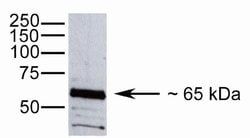
- On western blots, it identifies the target band at ∽65 kDa
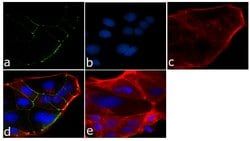
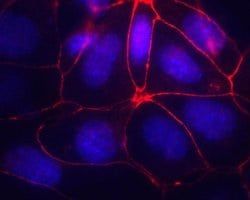
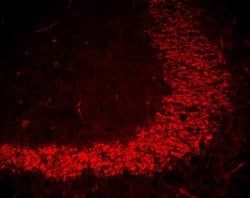
- Reactivity has been confirmed with human Caco-2 and HT29, dog MDCK, mouse TCMK, and rat KNRK cell lysates, and mouse kidney, liver, and rat liver homogenates by western blotting, Caco-2 cells by immunofluorescence, and paraffin-embedded human small intestine tissue by immunohistochemistry
- For immunofluorescence using Caco-2 cells, fixation with cold ethanol is recommended
- For immunohistochemistry in paraffin-embedded tissues, enzyme digestion with pepsin is required prior to staining
- Occludin is a 65 kDa protein that can exist in a variety of phosphorylated forms, ranging up to approximately 82 kDa
- Occludin is thought to be involved in regulating both the localization and the function of occludin
- Polyunsaturated fatty acids are known to up-regulate occludin expression, increasing the transendothelial cell resistance and reducing the cellular permeability to large molecules
- The level of occludin varies greatly depending on tissue; in brain tissue, occludin is highly and continuously expressed at cell-cell contact sites, whereas non-neural tissues show lower expression and discontinuous distribution
- Overall structural features of the occludin protein are highly conserved in all the species examined
- Under-expression of tight junction proteins, including occludin, is a key molecular abnormality responsible for the increased permeability of tumor endothelial tight junctions, which contributes to brain tumor edemas.