LAP (Latency Associated peptide) Monoclonal Antibody (TW7-16B4), PE-Cyanine7, eBioscience™, Invitrogen™
Manufacturer: Invitrogen
Select a Size
| Pack Size | SKU | Availability | Price |
|---|---|---|---|
| Each | 50-112-3462-Each | In Stock | ₹ 29,338.85 |
50-112-3462 - Each
In Stock
Quantity
1
Base Price: ₹ 29,338.85
GST (18%): ₹ 5,280.993
Total Price: ₹ 34,619.843
Antigen
LAP (Latency Associated peptide)
Classification
Monoclonal
Concentration
0.2 mg/mL
Formulation
PBS with 0.09% sodium azide; pH 7.2
Gene Accession No.
P04202
Gene Symbols
TGFB1
Purification Method
Affinity chromatography
Regulatory Status
RUO
Gene ID (Entrez)
21803
Content And Storage
4° C, store in dark, DO NOT FREEZE!
Form
Liquid
Applications
Flow Cytometry
Clone
TW7-16B4
Conjugate
PE-Cyanine7
Gene
TGFB1
Gene Alias
CED; DPD1; LAP; latency-associated peptide; prepro-transforming growth factor beta-1; regulatory protein; TGFB; Tgfb1; Tgfb-1; TGFbeta; TGF-beta 1; TGFbeta1; TGF-beta1; TGF-beta-1; transforming growth factor beta 1; transforming growth factor beta-1; Transforming growth factor beta-1 proprotein; transforming growth factor, beta 1; transforming growth factor-beta 1
Host Species
Mouse
Quantity
100 μg
Primary or Secondary
Primary
Target Species
Mouse
Product Type
Antibody
Isotype
IgG1 κ
Related Products


Description
- Description: The TW7-16B4 monoclonal antibody reacts with mouse latency associated peptide (LAP, pro-TGF beta 1, LAP/TGF beta 1)
- Many different cells produce TGF beta and it mediates effects on the proliferation, differentiation and function of many cell types
- TGF beta is synthesized as a precursor that contains LAP at the N-terminus and mature TGF beta at the C-terminus
- Processing and cleavage of the precursor protein between amino acids 278 and 279 results in the formation of LAP dimers and TGF beta dimers that then non-covalently associate with each other to form the small latent TGF beta complex
- LAP is secreted and can be found in the extracellular matrix
- In addition, LAP can also be expressed on platelets and activated regulatory T cells
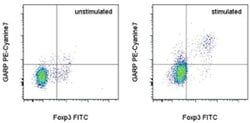
- It is believed that this surface-expressed LAP is due to the binding of LAP to GARP (LRRC32), which is a transmembrane protein that is also found at high levels on platelets and activated regulatory T cells
- Applications Reported: This TW7-16B4 antibody has been reported for use in flow cytometric analysis
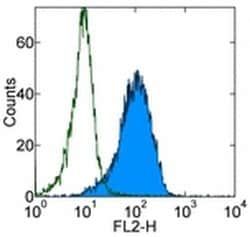
- Applications Tested: This TW7-16B4 antibody has been tested by flow cytometric analysis of stimulated mouse splenocytes
- This can be used at less than or equal to 0.125 μg per test
- A test is defined as the amount (μg) of antibody that will stain a cell sample in a final volume of 100 μL
- Cell number should be determined empirically but can range from 10^5 to 10^8 cells/test
- LAP (Latency Associated peptide) Monoclonal antibody specifically detects LAP (Latency Associated peptide) in Mouse samples
- It is validated for Flow Cytometry.