FOXP3 Monoclonal Antibody (236A/E7), APC, eBioscience™, Invitrogen™
Manufacturer: Fischer Scientific
Select a Size
| Pack Size | SKU | Availability | Price |
|---|---|---|---|
| Each of 1 | 50-112-9211-Each-of-1 | In Stock | ₹ 15,753.00 |
50-112-9211 - Each of 1
In Stock
Quantity
1
Base Price: ₹ 15,753.00
GST (18%): ₹ 2,835.54
Total Price: ₹ 18,588.54
Antigen
FOXP3
Classification
Monoclonal
Concentration
5 μL/Test
Formulation
PBS with 0.2% BSA and 0.09% sodium azide; pH 7.2
Gene Accession No.
Q9BZS1
Gene Symbols
Foxp3
Purification Method
Affinity chromatography
Regulatory Status
RUO
Gene ID (Entrez)
50943, 574303
Content And Storage
4° C, store in dark, DO NOT FREEZE!
Form
Liquid
Applications
Flow Cytometry
Clone
236A/E7
Conjugate
APC
Gene
Foxp3
Gene Alias
AIID; DIETER; forkhead box P3; forkhead box protein P3; Forkhead box protein P3 41 kDa form; Forkhead box protein P3, C-terminally processed; forkhead/winged helix transcription factor 3; Foxp3; FOXP3delta7; immune dysregulation, polyendocrinopathy, enteropathy, X-linked; immunodeficiency, polyendocrinopathy, enteropathy, X-linked; IPEX; JM2; MGC141961; MGC141963; PIDX; regulatory protein Foxp3; RGD1562112; RP23-54C14.1; scurfin; scurfy; sf; XPID
Host Species
Mouse
Quantity
25 Tests
Primary or Secondary
Primary
Target Species
Human, Non-human Primate, Rhesus Monkey
Product Type
Antibody
Isotype
IgG1 κ
Related Products


Description
- Description: The 236A/E7 antibody reacts with human Foxp3 protein also known as FORKHEAD BOX P3, SCURFIN, and JM2
- Foxp3, a 49-55 kDa protein, is a member of the forkhead/winged-helix family of transcriptional regulators, and was identified as the gene defective in 'scurfy' (sf) mice
- Constitutive high expression of Foxp3 mRNA has been shown in CD4+CD25+ regulatory T cells (Treg cells), and ectopic expression of Foxp3 in CD4+CD25- cells imparts a Treg phenotype in these cells
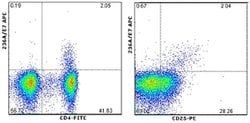
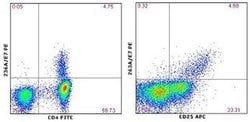
- Intracellular staining and flow cytometric analysis of freshly isolated human peripheral blood mononuclear cells (PBMCs) with the 236A/E7 antibody using the Foxp3/Transcription Factor Staining Buffer Set (cat
- 00-5523) and protocol reveals staining of the CD4+CD25bright population
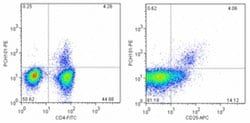
- The epitope from 236A/E7 is different from that of PCH101 (cat
- 72-5776)
- This antibody has also been shown to recognize rhesus macaque, sooty mangabey and cynomolgus macaque
- Applications Reported: This 236A/E7 antibody has been reported for use in intracellular staining followed by flow cytometric analysis
- Applications Tested: This 236A/E7 antibody has been pre-titrated and tested by intracellular staining and flow cytometric analysis of normal human peripheral blood cells using the Foxp3/Transcription Factor Buffer Set (cat
- 00-5523) and protocol
- FOXP3 (Forkhead box protein 3) is a member of the forkhead/winged-helix family of transcriptional regulators, highly conserved across mammals, and essential for normal immune homeostasis
- FOXP3 is 381 amino acids long, stably and constitutively expressed at a high level in CD25 + CD4 positive regulatory T cells, a low level in CD4-positive/CD25-negative cells, and is absent in CD4-negative/CD8-positive T cells
- FOXP3 may be a master regulatory gene, and a more specific marker of regulatory T cells
- Defects in the gene encoding FOXP3 protein cause the scurfy phenotype in mice
- In humans FOXP3 defects play a role in IPEX syndrome (immune dysfunction, polyendocrinopathy, enteropathy, X-linked syndrome), also known as X-linked autoimmunity-allergic dysregulation (XLAAD) syndrome
- Transcript variants of FOXP3 encoding different isoforms have been identified
- In human breast and colon cancer cells, expression of FOXP3 is regulated by p53 in response to the DNA damage.