CD47 Monoclonal Antibody (2D3), eBioscience™, Invitrogen™
Manufacturer: Invitrogen
Select a Size
| Pack Size | SKU | Availability | Price |
|---|---|---|---|
| Each of 1 | 50-126-15-Each-of-1 | In Stock | ₹ 12,460.00 |
50-126-15 - Each of 1
In Stock
Quantity
1
Base Price: ₹ 12,460.00
GST (18%): ₹ 2,242.80
Total Price: ₹ 14,702.80
Antigen
CD47
Classification
Monoclonal
Concentration
0.5 mg/mL
Formulation
PBS with 0.09% sodium azide; pH 7.2
Gene Accession No.
Q08722
Gene Symbols
CD47
Purification Method
Affinity chromatography
Regulatory Status
RUO
Gene ID (Entrez)
961
Content And Storage
4° C
Form
Liquid
Applications
Flow Cytometry, Western Blot
Clone
2D3
Conjugate
Unconjugated
Gene
CD47
Gene Alias
9130415E20Rik; AA407862; AI848868; antigen identified by monoclonal antibody 1D8; antigenic surface determinant protein OA3; AW108519; B430305P08Rik; Cd47; CD47 antigen; CD47 antigen (Rh-related antigen, integrin-associated signal transducer); CD47 antigen/integrin-associated protein; CD47 glycoprotein; CD47 molecule; CD47/IAP; IAP; integrin associated protein; integrin-associated protein; integrin-associated signal transducer; Itgp; Leukocyte surface antigen CD47; MER6; OA3; Protein MER6; Rh-related antigen; sCD47; soluble CD 47; soluble CD47
Host Species
Mouse
Quantity
100 μg
Primary or Secondary
Primary
Target Species
Human
Product Type
Antibody
Isotype
IgG1 κ
Related Products
Description
- Description: The monoclonal antibody 2D3 reacts to CD47 also known as integrin-associated protein (IAP), and neurophilin
- CD47 is a glycosylated five transmembrane protein with a small alternatively spliced cytoplasmic domain
- CD47 is involved in adhesion through interactions with SIRP (signal regulator protein) and is non-covalently associated with beta3 integrins CD51/CD61 and CD41/CD61
- Furthermore this interaction can mediate bi-directional signaling to modify neural synaptic activity and regulate the phagocytic activities of macrophages
- CD47 is the receptor for thrombospondin
- T cell expression of CD47 can mediate activation or apoptosis (in the presence of high levels of thrombospondin)
- Expression is found in the majority of hematopoietic cells including T and B cells, monocytes, platelets and erythrocytes (as part of the Rh complex)
- Expression is also found in non-hematopoietic cells
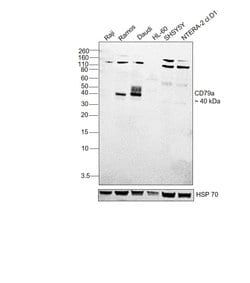
- Applications Reported: This 2D3 antibody has been reported for use in flow cytometric analysis, and immunoblotting (WB) under nonreducing conditions
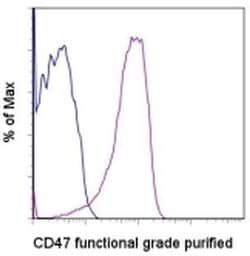
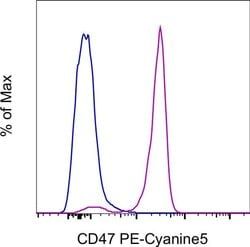
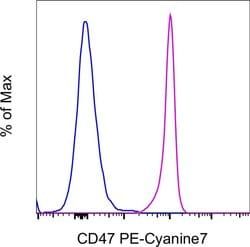
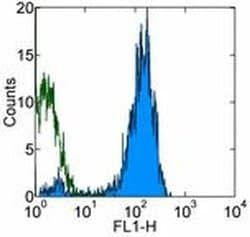
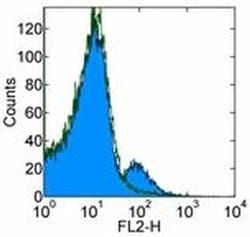
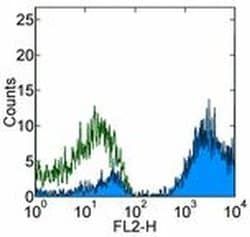
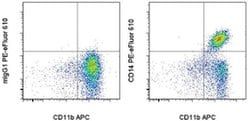
- Applications Tested: This 2D3 antibody has been tested by flow cytometric analysis of normal human peripheral blood cells
- This can be used at less than or equal to 0.5 μg per test
- A test is defined as the amount (μg) of antibody that will stain a cell sample in a final volume of 100 μL
- Cell number should be determined empirically but can range from 10^5 to 10^8 cells/test
- CD47 (integrin-associated protein, IAP) is a ubiquitously expressed cell surface transmembrane glycoprotein interacting with several integrins and regulating their functions
- Engagement of CD47 by soluble ligands or counter receptors modulates various signaling pathways, such as activation of heterotrimeric G proteins
- Functionally, CD47 is involved in the increase in intracellular calcium concentration that occurs upon cell adhesion to extracellular matrix
- CD47 is also a receptor for the C-terminal cell binding domain of thrombospondin, and it may play a role in membrane transport and signal transduction
- CD47 has broad tissue distribution, is reduced in expression on Rh erythrocytes
- CD47 acts as a ligand for CD172a (signal regulatory protein alpha, SIRP alpha), an immune inhibitory receptor on macrophages; this interaction prevents phagocytosis of CD47-positive cells
- Moreover, CD47-CD172a system affects cell migration, B cell adhesion, T cell activation, and is involved in modulation of chondrocyte responses to mechanical signals, and promotes neuronal development, being especially abundant in synapse-rich regions of brain and retina.