50-155-7450
p300 Polyclonal Antibody, Bethyl Laboratories
Manufacturer: Bethyl Laboratories, Inc
Select a Size
| Pack Size | SKU | Availability | Price |
|---|---|---|---|
| Each of 1 | 50-155-7450-Each-of-1 | In Stock | ₹ 12,384.35 |
50-155-7450 - Each of 1
In Stock
Quantity
1
Base Price: ₹ 12,384.35
GST (18%): ₹ 2,229.183
Total Price: ₹ 14,613.533
Antigen
p300
Classification
Polyclonal
Formulation
TBS with 0.1% BSA and 0.09% sodium azide
Gene Accession No.
Q09472
Gene Symbols
EP300
Immunogen
Between 950 and 1000
Quantity
20 μL
Primary or Secondary
Primary
Target Species
Human
Product Type
Antibody
Isotype
IgG
Applications
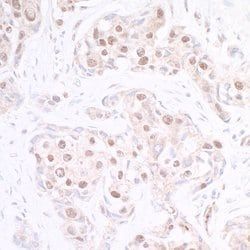
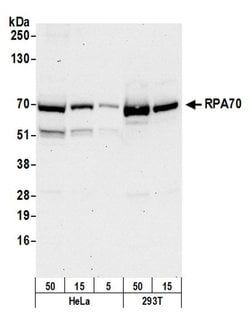
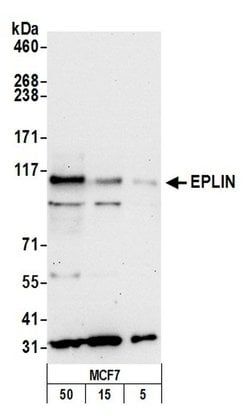
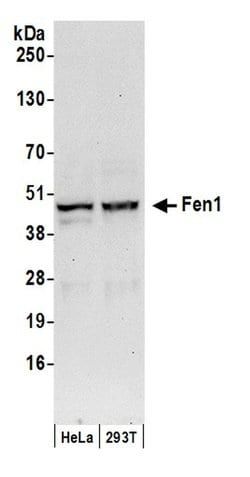
Immunohistochemistry, Western Blot
Conjugate
Unconjugated
Gene
EP300
Gene Alias
CREBBP/EP300 inhibitory protein 1, Cyclic AMP responsive enhancer binding protein, EP300: E1A binding protein p300, RB and P300 binding protein EID 1,
Host Species
Rabbit
Purification Method
Antigen affinity chromatography
Regulatory Status
RUO
Gene ID (Entrez)
2033
Content And Storage
4° C
Form
Liquid
Related Products



Description
- The recommended shelf life for this product is 1 year from date of receipt
- Application Note: For IHC, epitope retrieval with citrate buffer pH 6.0 is recommended for FFPE tissue sections
- EP300 encodes the adenovirus E1A-associated cellular p300 transcriptional co-activator protein
- p300 is related by sequence to CPB (CREB-binding protein [CREB: cyclic-AMP responsive element binding protein]), and like CPB can stimulate transcription through activation of CREB
- This EP300 activity is specifically inhibited by the adenovirus oncoprotein E1A
- EP300 has also been identified as a co-activator of HIF1A (hypoxia-inducible factor 1 alpha), and thus plays a role in the stimulation of hypoxia-induced genes such as VEGF.