50-155-7799
RanBP1 Rabbit anti-Human, Polyclonal, Bethyl Laboratories
Manufacturer: Bethyl Laboratories, Inc
Select a Size
| Pack Size | SKU | Availability | Price |
|---|---|---|---|
| Each of 1 | 50-155-7799-Each-of-1 | In Stock | ₹ 43,546.81 |
50-155-7799 - Each of 1
In Stock
Quantity
1
Base Price: ₹ 43,546.81
GST (18%): ₹ 7,838.426
Total Price: ₹ 51,385.236
Antigen
RanBP1
Classification
Polyclonal
Conjugate
Unconjugated
Gene
RANBP1
Gene Alias
Ran Binding Protein 1, RANG, Ran-specific GTPase-activating protein
Host Species
Rabbit
Purification Method
Antigen affinity chromatography
Regulatory Status
RUO
Gene ID (Entrez)
5902
Content And Storage
4° C
Form
Liquid
Applications
Immunohistochemistry, Immunoprecipitation, Western Blot
Concentration
1 mg/ml
Formulation
phosphate, tris citrate with 0.09% sodium azide; pH 7-8
Gene Accession No.
P43487
Gene Symbols
RANBP1
Immunogen
Between 1 and 50
Quantity
100 μL
Primary or Secondary
Primary
Target Species
Human
Product Type
Antibody
Isotype
IgG
Related Products



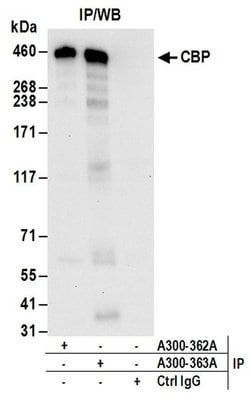

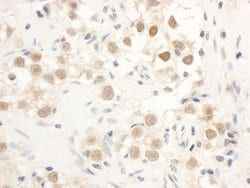


Description
- The recommended shelf life for this product is 1 year from date of receipt
- Application Note: For IHC, epitope retrieval with citrate buffer pH 6.0 is recommended for FFPE tissue sections
- Ran/TC4-binding protein, RanBP1, interacts specifically with GTP-charged RAN
- RANBP1 encodes a 23-kD protein that binds to RAN complexed with GTP but not GDP
- RANBP1 does not activate GTPase activity of RAN but does markedly increase GTP hydrolysis by the RanGTPase-activating protein (RanGAP1)
- The RANBP1 cDNA encodes a 201-amino acid protein that is 92% similar to its mouse homolog
- In both mammalian cells and in yeast, RANBP1 acts as a negative regulator of RCC1 by inhibiting RCC1-stimulated guanine nucleotide release from RAN.