50-157-1493
NUP214 Polyclonal Antibody, Bethyl Laboratories
Manufacturer: Fischer Scientific
Select a Size
| Pack Size | SKU | Availability | Price |
|---|---|---|---|
| Each of 1 | 50-157-1493-Each-of-1 | In Stock | ₹ 46,161.63 |
50-157-1493 - Each of 1
In Stock
Quantity
1
Base Price: ₹ 46,161.63
GST (18%): ₹ 8,309.093
Total Price: ₹ 54,470.723
Antigen
NUP214
Classification
Polyclonal
Formulation
TBS with 0.1% BSA and 0.09% sodium azide
Gene Accession No.
P35658
Gene Symbols
NUP214
Immunogen
Between 1250 and 1300
Quantity
100 μL
Primary or Secondary
Primary
Target Species
Human
Product Type
Antibody
Isotype
IgG
Applications
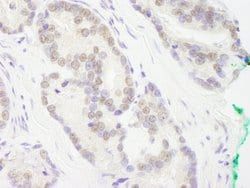
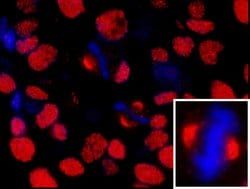
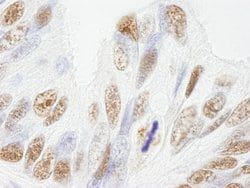
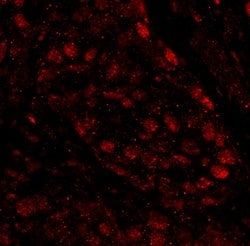
Immunocytochemistry, Immunofluorescence, Immunohistochemistry
Conjugate
Unconjugated
Gene
NUP214
Gene Alias
Calcineurin Inhibitor
Host Species
Rabbit
Purification Method
Antigen affinity chromatography
Regulatory Status
RUO
Gene ID (Entrez)
8021
Content And Storage
4° C
Form
Liquid
Related Products


Description
- The recommended shelf life for this product is 1 year from date of receipt
- Based on 100% sequence identity, this antibody is predicted to react with Orangutan, Monkey, Gorilla and Chimpanzee Calcineurin is a widely distributed Ser/Thr, calcium and calmodulin-dependent protein phosphatase
- It mediates the immunosuppressive actions of drugs such as FK506 and cyclosporin, and has also been implicated in a number of calcium-sensitive pathways in the nervous system
- Calcineurin has been found to be associated with other proteins, such as calmodulin, FKBP12, the ryanodine receptor, inositol 1,4,5-trisphosphate, and a recently identified protein, calcineurin inhibitor (cain)
- Cain has been shown to bind calcineurin through its C-terminal tail
- Recent studies have shown cain to bind to both amphiphysin 1 and calcineurin simultaneously and therefore acts as a physiological inhibitor of calcineurin
- The binding of cain to amphiphysin 1 does not affect the interaction of amphiphysin 1 with other endocytic proteins
- Cain, like calcineurin, is highly expressed in neurons and other tissues.