50-157-1850
ZC3H11A Polyclonal Antibody, Bethyl Laboratories
Manufacturer: Fischer Scientific
Select a Size
| Pack Size | SKU | Availability | Price |
|---|---|---|---|
| Each of 1 | 50-157-1850-Each-of-1 | In Stock | ₹ 12,384.35 |
50-157-1850 - Each of 1
In Stock
Quantity
1
Base Price: ₹ 12,384.35
GST (18%): ₹ 2,229.183
Total Price: ₹ 14,613.533
Antigen
ZC3H11A
Classification
Polyclonal
Formulation
TBS with 0.1% BSA and 0.09% sodium azide
Gene Accession No.
O75152
Gene Symbols
ZC3H11A
Immunogen
Between 700 and 750
Quantity
10 μL
Primary or Secondary
Primary
Target Species
Human
Product Type
Antibody
Isotype
IgG
Applications
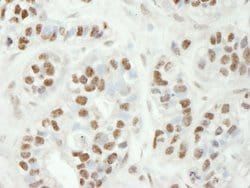
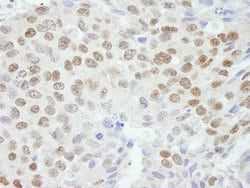
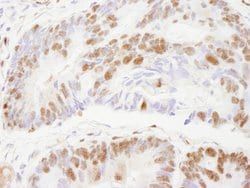
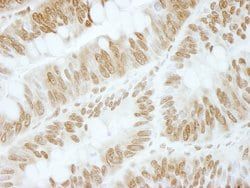
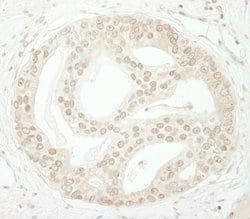
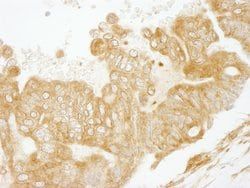
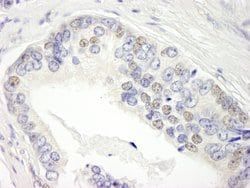
Immunohistochemistry
Conjugate
Unconjugated
Gene
ZC3H11A
Gene Alias
Zinc finger CCCH domain-containing protein 11A, KIAA0663, ZC3HDC11A
Host Species
Rabbit
Purification Method
Antigen affinity chromatography
Regulatory Status
RUO
Gene ID (Entrez)
9877
Content And Storage
4° C
Form
Liquid
Related Products
Description
- The recommended shelf life for this product is 1 year from date of receipt
- Based on 100% sequence identity, this antibody is predicted to react with Orangutan, Monkey, Gorilla, Chimpanzee, Northern white-cheeked gibbon and Crab-eating macaque ZC3H11A (zinc finger CCCH domain-containing protein 11A), also known as KIAA0663 or ZC3HDC11A, is an 810 amino acid protein that contains 3 C3 H1-type zinc fingers
- ZC3H11A is expressed in heart, brain, liver, skeletal muscle, kidney, pancreas, spleen, testis, ovary, fetal brain and fetal liver
- The gene encoding ZC3H11A maps to human chromosome 1q32.1 and mouse chromosome 1 E4
- Chromosome 1 is the largest human chromosome spanning about 260 million base pairs and making up 8% of the human genome
- The rare aging disease Hutchinson-Gilford progeria is associated with the LMNA gene on chromosome 1 which encodes lamin A
- When defective, the LMNA gene product can build up in the nucleus and cause characteristic nuclear blebs
- Stickler syndrome, Parkinsons, Gaucher disease and Usher syndrome are also associated with chromosome 1.