50-157-2521
BAD Polyclonal Antibody, Bethyl Laboratories
Manufacturer: Fischer Scientific
Select a Size
| Pack Size | SKU | Availability | Price |
|---|---|---|---|
| Each of 1 | 50-157-2521-Each-of-1 | In Stock | ₹ 46,161.63 |
50-157-2521 - Each of 1
In Stock
Quantity
1
Base Price: ₹ 46,161.63
GST (18%): ₹ 8,309.093
Total Price: ₹ 54,470.723
Antigen
BAD
Classification
Polyclonal
Formulation
TBS with 0.1% BSA and 0.09% sodium azide
Gene Accession No.
Q61337, Q92934
Gene Symbols
Bad
Immunogen
Between 1 and 50
Quantity
100 μL
Primary or Secondary
Primary
Target Species
Human, Mouse
Product Type
Antibody
Isotype
IgG
Applications
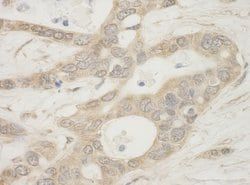
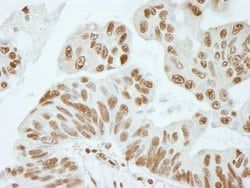
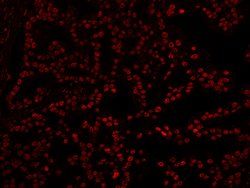
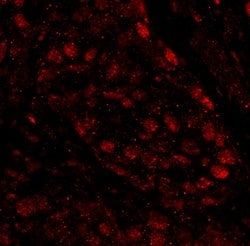
Immunofluorescence, Immunohistochemistry
Conjugate
Unconjugated
Gene
BAD
Gene Alias
Bcl-associated death promoter
Host Species
Rabbit
Purification Method
Antigen affinity chromatography
Regulatory Status
RUO
Gene ID (Entrez)
12015, 572
Content And Storage
4° C
Form
Liquid
Related Products
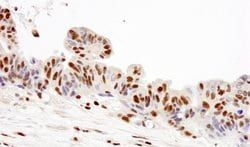
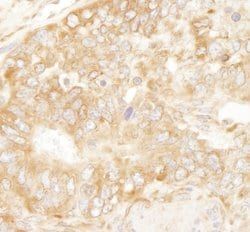
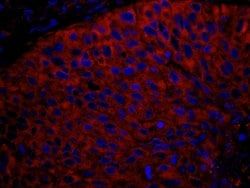
Description
- The recommended shelf life for this product is 1 year from date of receipt
- Based on 100% sequence identity, this antibody is predicted to react with Rat, Dog, Panda, Cat, Orangutan, Monkey, Gorilla, Chimpanzee, hirteen-lined ground squirrel and S The protein encoded by this gene is a member of the BCL-2 family
- BCL-2 family members are known to be regulators of programmed cell death
- This protein positively regulates cell apoptosis by forming heterodimers with BCL-xL and BCL-2, and reversing their death repressor activity
- Proapoptotic activity of this protein is regulated through its phosphorylation
- Protein kinases AKT and MAP kinase, as well as protein phosphatase calcineurin were found to be involved in the regulation of this protein
- Alternative splicing of this gene results in two transcript variants which encode the same isoform.