50-157-2549
Cul2 Polyclonal Antibody, Bethyl Laboratories
Manufacturer: Fischer Scientific
Select a Size
| Pack Size | SKU | Availability | Price |
|---|---|---|---|
| Each of 1 | 50-157-2549-Each-of-1 | In Stock | ₹ 46,161.63 |
50-157-2549 - Each of 1
In Stock
Quantity
1
Base Price: ₹ 46,161.63
GST (18%): ₹ 8,309.093
Total Price: ₹ 54,470.723
Antigen
Cul2
Classification
Polyclonal
Formulation
TBS with 0.1% BSA and 0.09% sodium azide
Gene Accession No.
Q13617, Q9D4H8
Gene Symbols
Cul2
Immunogen
Between 150 and 200
Quantity
100 μL
Primary or Secondary
Primary
Target Species
Human, Mouse
Product Type
Antibody
Isotype
IgG
Applications
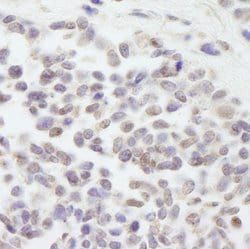
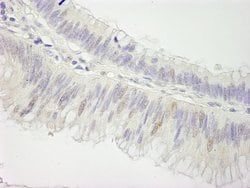
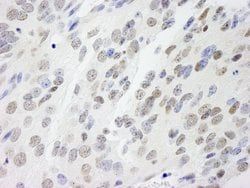
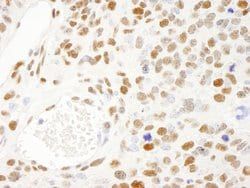
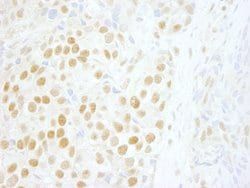
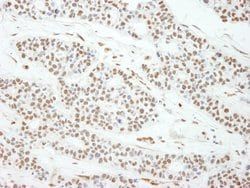
Immunohistochemistry
Conjugate
Unconjugated
Gene
CUL2
Gene Alias
CUL-2
Host Species
Rabbit
Purification Method
Antigen affinity chromatography
Regulatory Status
RUO
Gene ID (Entrez)
71745, 8453
Content And Storage
4° C
Form
Liquid
Related Products

Description
- The recommended shelf life for this product is 1 year from date of receipt
- Based on 100% sequence identity, this antibody is predicted to react with Rat, Bovine, Dog, Horse, Guinea pig_10141, Panda, Orangutan, Monkey, Gorilla, Chimpanzee, CUL-2 is a member of the family of human cullin genes (CUL-1, -2, -3, -4a, -4b, and -5), homologous to the S
- cerevisiae cdc53 gene
- CUL-1 forms a complex with human p19skp1 and F box protein p45skp2
- Together with cdc53 (Known as CulA), as three subunits, they form a ubiquitin ligase controlling proteolysis of G1 cell cycle regulatory proteins
- In contrast to CUL-1, CUL-2 does not associate with p19skp1 and p45skp2
- Instead, CUL-2 forms a complex with an inactive transcriptional elongation complex, SIII, formed by three subunits: Elongain C, Elongin B and VHL
- The function of this association remains unknown.