50-165-9633
PRKY Mouse anti-Human, Clone: OTI3D11, lyophilized, TrueMAB™
Manufacturer: OriGene
Select a Size
| Pack Size | SKU | Availability | Price |
|---|---|---|---|
| Each of 1 | 50-165-9633-Each-of-1 | In Stock | ₹ 60,342.00 |
50-165-9633 - Each of 1
In Stock
Quantity
1
Base Price: ₹ 60,342.00
GST (18%): ₹ 10,861.56
Total Price: ₹ 71,203.56
Antigen
PRKY
Classification
Monoclonal
Conjugate
Unconjugated
Gene
PRKY
Gene Alias
PRKXP3, PRKYP
Host Species
Mouse
Purification Method
Affinity Chromatography
Regulatory Status
RUO
Gene ID (Entrez)
5616
Content And Storage
-20° C, Avoid Freeze/Thaw Cycles
Form
Lyophilized
Applications
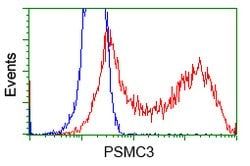
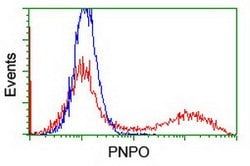
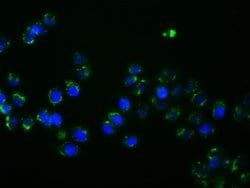
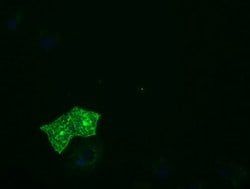
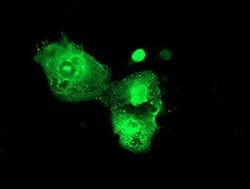
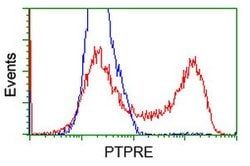
Flow Cytometry, Immunocytochemistry, Immunofluorescence
Clone
OTI3D11
Formulation
PBS with 8% trehalose and no preservative; pH 7.3
Gene Accession No.
O43930
Gene Symbols
PRKY
Immunogen
Full length human recombit protein of human PRKY produced in HEK293T cell.
Quantity
100 μg
Primary or Secondary
Primary
Target Species
Human
Product Type
Antibody
Isotype
IgG1
Related Products

Description
- Reconstitute with PBS (pH 7.3) and recommend to perform another round of desalting process using Product No
- 7KMWCO A group of proteins that are intimately involved in this process are the serine/ threonine (Ser/Thr) protein kinases
- PRKY (protein kinase, Y-linked) and PRKX (protein kinase, X-linked) are members of the Ser/Thr protein kinase family, both of which belong to the subfamily of cAMP-dependent kinases
- Encoded by a gene that is located near the pseudoautosomal region on chromosome Y, PRKY contains one protein kinase domain through which it catalyzes the ATP-dependent phosphorylation of target proteins
- Functioning in a similar manner to PRXY, PRKX contains one protein kinase domain and is essential for macrophage differentiation and renal epithelial cell migration
- Defects in the genes encoding PRKY and PRXX are associated with sex reversal disorder, namely XX in males and XY in females.