50-165-9756
PSMA7 Mouse anti-Human, Clone: OTI8F9, lyophilized, TrueMAB™
Manufacturer: OriGene
Select a Size
| Pack Size | SKU | Availability | Price |
|---|---|---|---|
| Each of 1 | 50-165-9756-Each-of-1 | In Stock | ₹ 60,342.00 |
50-165-9756 - Each of 1
In Stock
Quantity
1
Base Price: ₹ 60,342.00
GST (18%): ₹ 10,861.56
Total Price: ₹ 71,203.56
Antigen
PSMA7
Classification
Monoclonal
Conjugate
Unconjugated
Gene
PSMA7
Gene Alias
C6, HEL-S-276, HSPC, RC6-1, XAPC7
Host Species
Mouse
Purification Method
Affinity Chromatography
Regulatory Status
RUO
Gene ID (Entrez)
5688
Content And Storage
-20° C, Avoid Freeze/Thaw Cycles
Form
Lyophilized
Applications
Flow Cytometry, Immunocytochemistry, Immunofluorescence, Western Blot
Clone
OTI8F9
Formulation
PBS with 8% trehalose and no preservative; pH 7.3
Gene Accession No.
O14818
Gene Symbols
PSMA7
Immunogen
Full length human recombit protein of human PSMA7 produced in HEK293T cell.
Quantity
100 μg
Primary or Secondary
Primary
Target Species
Human
Product Type
Antibody
Isotype
IgG2a
Related Products
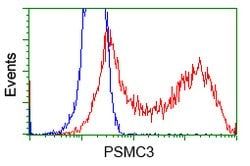
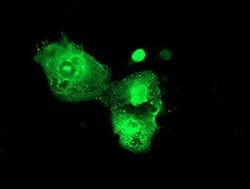
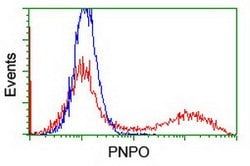
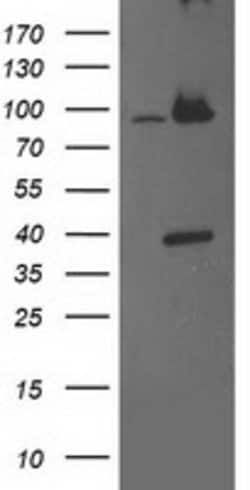
Description
- Reconstitute with PBS (pH 7.3) and recommend to perform another round of desalting process using Product No
- 7KMWCO Component of the 20S core proteasome complex involved in the proteolytic degradation of most intracellular proteins
- This complex plays numerous essential roles within the cell by associating with different regulatory particles
- Associated with two 19S regulatory particles, forms the 26S proteasome and thus participates in the ATP-dependent degradation of ubiquitinated proteins
- The 26S proteasome plays a key role in the maintece of protein homeostasis by removing misfolded or damaged proteins that could impair cellular functions, and by removing proteins whose functions are no longer required
- Associated with the PA200 or PA28, the 20S proteasome mediates ubiquitin-independent protein degradation
- This type of proteolysis is required in several pathways including spermatogenesis (20S-PA200 complex) or generation of a subset of MHC class I-presented antigenic peptides (20S-PA28 complex)
- Inhibits the transactivation function of HIF-1A under both normoxic and hypoxia-mimicking conditions
- The interaction with EMAP2 increases the proteasome-mediated HIF-1A degradation under the hypoxic conditions
- Plays a role in hepatitis C virus internal ribosome entry site-mediated translation
- Mediates nuclear translocation of the androgen receptor (AR) and thereby enhances androgen-mediated transactivation.