50-166-0067
PTPRE Mouse anti-Human, Clone: OTI3H8, lyophilized, TrueMAB™
Manufacturer: OriGene
Select a Size
| Pack Size | SKU | Availability | Price |
|---|---|---|---|
| Each of 1 | 50-166-0067-Each-of-1 | In Stock | ₹ 60,342.00 |
50-166-0067 - Each of 1
In Stock
Quantity
1
Base Price: ₹ 60,342.00
GST (18%): ₹ 10,861.56
Total Price: ₹ 71,203.56
Antigen
PTPRE
Classification
Monoclonal
Conjugate
Unconjugated
Gene
PTPRE
Gene Alias
HPTPE, PTPE, R-PTP-EPSILON
Host Species
Mouse
Purification Method
Affinity Chromatography
Regulatory Status
RUO
Gene ID (Entrez)
5791
Content And Storage
-20° C, Avoid Freeze/Thaw Cycles
Form
Lyophilized
Applications
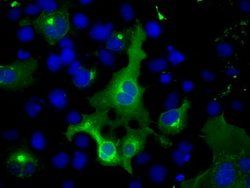
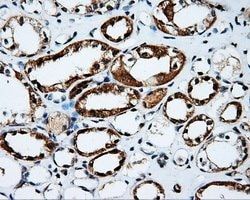
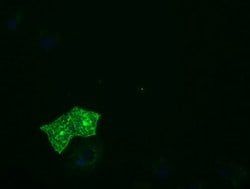
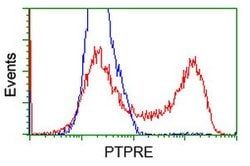
Immunocytochemistry, Immunofluorescence, Immunohistochemistry (Paraffin), Western Blot
Clone
OTI3H8
Formulation
PBS with 8% trehalose and no preservative; pH 7.3
Gene Accession No.
P23469
Gene Symbols
PTPRE
Immunogen
Full length human recombit protein of human PTPRE produced in HEK293T cell.
Quantity
100 μg
Primary or Secondary
Primary
Target Species
Human
Product Type
Antibody
Isotype
IgG1
Related Products
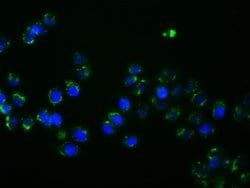
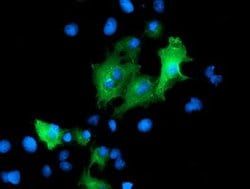


Description
- Reconstitute with PBS (pH 7.3) and recommend to perform another round of desalting process using Product No
- 7KMWCO The protein encoded by this gene is a member of the protein tyrosine phosphatase family
- PTPs are known to be signaling molecules that regulate a variety of cellular processes including cell growth, differentiation, mitotic cycle, and oncogenic transformation
- Two alternatively spliced transcript variants of this gene have been reported, one of which encodes a receptor-type PTP that possesses a short extracellular domain, a single transmembrane region, and two tandem intracytoplasmic catalytic domains; Another one encodes a PTP that contains a distinct hydrophilic N-terminus, and thus represents a nonreceptor-type isoform of this PTP
- Studies of the similar gene in mice suggested the regulatory roles of this PTP in RAS related signal transduction pathways, cytokines induced SATA signaling, as well as the activation of voltage-gated K+ channels.