50-166-2142
PDE4B Mouse anti-Human, Clone: OTI2B10, lyophilized, TrueMAB™
Manufacturer: OriGene
Select a Size
| Pack Size | SKU | Availability | Price |
|---|---|---|---|
| Each of 1 | 50-166-2142-Each-of-1 | In Stock | ₹ 60,342.00 |
50-166-2142 - Each of 1
In Stock
Quantity
1
Base Price: ₹ 60,342.00
GST (18%): ₹ 10,861.56
Total Price: ₹ 71,203.56
Antigen
PDE4B
Classification
Monoclonal
Conjugate
Unconjugated
Gene
PDE4B
Gene Alias
DPDE4, PDEIVB
Host Species
Mouse
Purification Method
Affinity Chromatography
Regulatory Status
RUO
Gene ID (Entrez)
5142
Content And Storage
-20° C, Avoid Freeze/Thaw Cycles
Form
Lyophilized
Applications
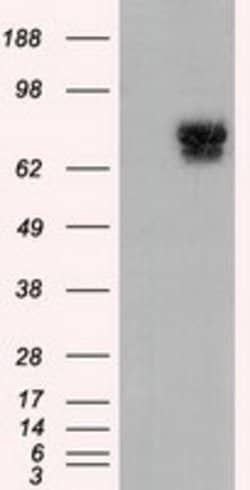
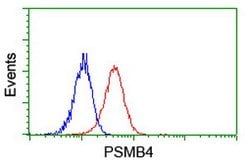
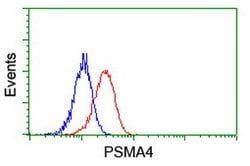
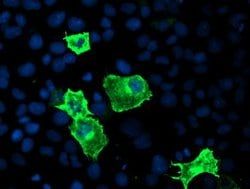
Flow Cytometry, Western Blot
Clone
OTI2B10
Formulation
PBS with 8% trehalose and no preservative; pH 7.3
Gene Accession No.
Q07343
Gene Symbols
PDE4B
Immunogen
Full length human recombit protein of human PDE4B produced in HEK293T cell.
Quantity
100 μg
Primary or Secondary
Primary
Target Species
Human
Product Type
Antibody
Isotype
IgG1
Related Products
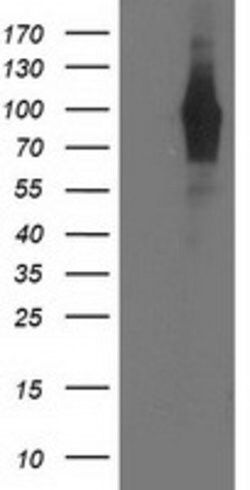
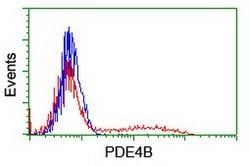
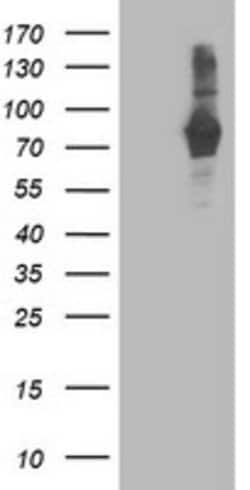
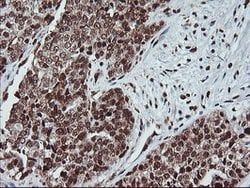
Description
- Reconstitute with PBS (pH 7.3) and recommend to perform another round of desalting process using Product No
- 7KMWCO This gene is a member of the type IV, cyclic AMP (cAMP)-specific, cyclic nucleotide phosphodiesterase (PDE) family
- Cyclic nucleotides are important second messengers that regulate and mediate a number of cellular responses to extracellular signals, such as hormones, light, and neurotransmitters
- The cyclic nucleotide phosphodiesterases (PDEs) regulate the cellular concentrations of cyclic nucleotides and thereby play a role in signal transduction
- This gene encodes a protein that specifically hydrolyzes cAMP
- Altered activity of this protein has been associated with schizophrenia and bipolar affective disorder
- Alternate transcriptional splice variants, encoding different isoforms, have been characterized.