50-166-5792
TSC1 Mouse anti-Human, Clone: OTI3A2, lyophilized, TrueMAB™
Manufacturer: OriGene
Select a Size
| Pack Size | SKU | Availability | Price |
|---|---|---|---|
| Each of 1 | 50-166-5792-Each-of-1 | In Stock | ₹ 60,342.00 |
50-166-5792 - Each of 1
In Stock
Quantity
1
Base Price: ₹ 60,342.00
GST (18%): ₹ 10,861.56
Total Price: ₹ 71,203.56
Antigen
TSC1
Classification
Monoclonal
Conjugate
Unconjugated
Gene
TSC1
Gene Alias
LAM, TSC
Host Species
Mouse
Purification Method
Affinity Chromatography
Regulatory Status
RUO
Gene ID (Entrez)
7248
Content And Storage
-20° C, Avoid Freeze/Thaw Cycles
Form
Lyophilized
Applications
Immunohistochemistry (Paraffin), Western Blot
Clone
OTI3A2
Formulation
PBS with 8% trehalose and no preservative; pH 7.3
Gene Accession No.
Q92574
Gene Symbols
TSC1
Immunogen
Human recombit protein fragment corresponding to amino acids 836-1164 of human TSC1 produced in E.coli.
Quantity
100 μg
Primary or Secondary
Primary
Target Species
Human
Product Type
Antibody
Isotype
IgG2a
Related Products
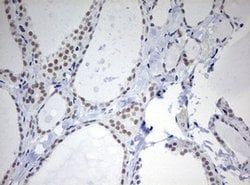
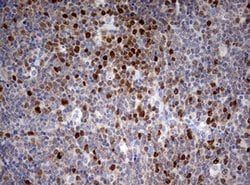

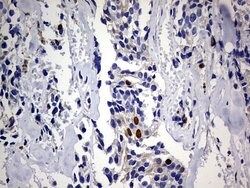
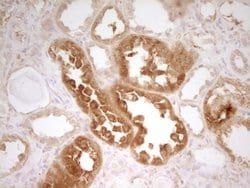
Description
- Reconstitute with PBS (pH 7.3) and recommend to perform another round of desalting process using Product No
- 7KMWCO Implicated as a tumor suppressor
- May have a function in vesicular transport
- Interaction between TSC1 and TSC2 may facilitate vesicular docking.Defects in TSC1 are the cause of tuberous sclerosis complex (TSC)
- The molecular basis of TSC is a functional impairement of the hamartin-tuberin complex
- TSC is an autosomal domit multi-system disorder that affects especially the brain, kidneys, heart, and skin
- TSC is characterized by hamartomas (benign overgrowths predomitly of a cell or tissue type that occurs normally in the organ) and hamartias (developmental abnormalities of tissue combination)
- Clinical symptoms can range from benign hypopigmented macules of the skin to profound mental retardation with intractable seizures to premature death from a variety of disease-associated causes.Defects in TSC1 may be a cause of focal cortical dysplasia of Taylor balloon cell type (FCDBC)
- FCDBC is a subtype of cortical displasias linked to chronic intractable epilepsy
- Cortical dysplasias display a broad spectrum of structural changes, which appear to result from changes in proliferation, migration, differentiation, and apoptosis of neuronal precursors and neurons during cortical development.