50-166-5956
TGIF1 Mouse anti-Human, Clone: OTI2E7, lyophilized, TrueMAB™
Manufacturer: OriGene
Select a Size
| Pack Size | SKU | Availability | Price |
|---|---|---|---|
| Each of 1 | 50-166-5956-Each-of-1 | In Stock | ₹ 60,342.00 |
50-166-5956 - Each of 1
In Stock
Quantity
1
Base Price: ₹ 60,342.00
GST (18%): ₹ 10,861.56
Total Price: ₹ 71,203.56
Antigen
TGIF1
Classification
Monoclonal
Conjugate
Unconjugated
Gene
TGIF1
Gene Alias
HPE4, TGIF
Host Species
Mouse
Purification Method
Affinity Chromatography
Regulatory Status
RUO
Gene ID (Entrez)
7050
Content And Storage
-20° C, Avoid Freeze/Thaw Cycles
Form
Lyophilized
Applications
Western Blot
Clone
OTI2E7
Formulation
PBS with 8% trehalose and no preservative; pH 7.3
Gene Accession No.
Q15583
Gene Symbols
TGIF1
Immunogen
Full length human recombit protein of human TGIF1 produced in E.coli.
Quantity
100 μg
Primary or Secondary
Primary
Target Species
Human
Product Type
Antibody
Isotype
IgG1
Related Products
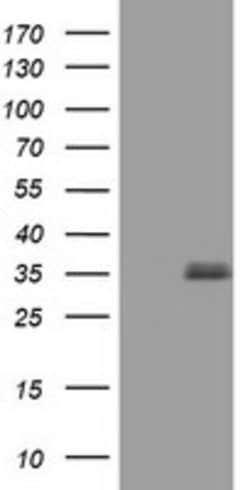
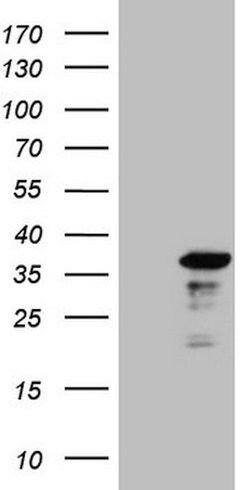
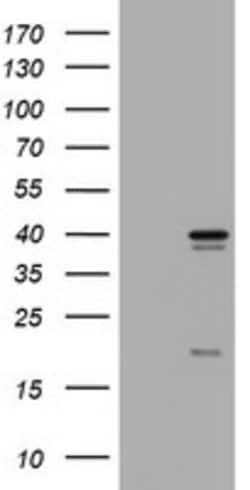
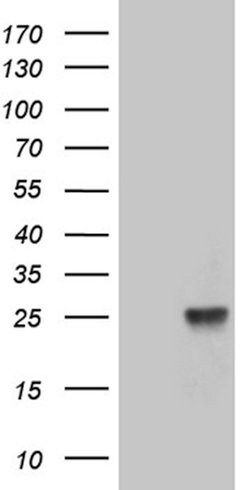
Description
- Reconstitute with PBS (pH 7.3) and recommend to perform another round of desalting process using Product No
- 7KMWCO TGIF is a member of the three-amino acid loop extension (TALE) superclass of atypical homeodomains
- TALE homeobox proteins are highly conserved transcription regulators
- This particular homeodomain binds to a previously characterized retinoid X receptor responsive element from the cellular retinol-binding protein II promoter
- In addition to its role in inhibiting 9-cis-retinoic acid-dependent RXR alpha transcription activation of the retinoic acid responsive element, the protein is an active transcriptional co-repressor of SMAD2 and may participate in the transmission of nuclear signals during development and in the adult
- Mutations in this gene are associated with holoprosencephaly type 4, which is a structural anomaly of the brain.