50-166-8234
PON3 Mouse anti-Human, Clone: OTI1F12, lyophilized, TrueMAB™
Manufacturer: OriGene
Select a Size
| Pack Size | SKU | Availability | Price |
|---|---|---|---|
| Each of 1 | 50-166-8234-Each-of-1 | In Stock | ₹ 60,342.00 |
50-166-8234 - Each of 1
In Stock
Quantity
1
Base Price: ₹ 60,342.00
GST (18%): ₹ 10,861.56
Total Price: ₹ 71,203.56
Antigen
PON3
Classification
Monoclonal
Conjugate
Unconjugated
Gene
PON3
Gene Alias
paraoxonase 3
Host Species
Mouse
Purification Method
Affinity Chromatography
Regulatory Status
RUO
Gene ID (Entrez)
5446
Content And Storage
-20° C, Avoid Freeze/Thaw Cycles
Form
Lyophilized
Applications
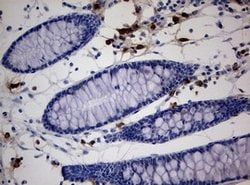
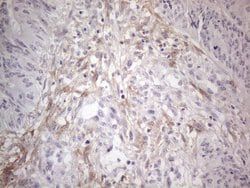
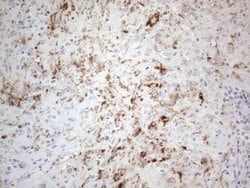
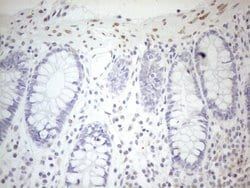
Immunohistochemistry (Paraffin), Western Blot
Clone
OTI1F12
Formulation
PBS with 8% trehalose and no preservative; pH 7.3
Gene Accession No.
Q15166
Gene Symbols
PON3
Immunogen
Human recombit protein fragment corresponding to amino acids 30-319 of human PON3 produced in E.coli.
Quantity
100 μg
Primary or Secondary
Primary
Target Species
Human
Product Type
Antibody
Isotype
IgG1
Related Products
Description
- Reconstitute with PBS (pH 7.3) and recommend to perform another round of desalting process using Product No
- 7KMWCO Paraoxonase-1 (PON1) is a calcium-dependent ester hydrolase that is tightly associated with apoA-I in HDL
- PON1 prevents the oxidation of LDL, thereby the formation of atherogenic oxidised-LDL
- Polymorphisms of the human PON1 gene are correlated with coronary artery disease, indicating a genetic association between PON1 and coronary artery disease
- PON1 activity is lower in subjects prone to development of atherosclerosis such as in type 1 and type 2 diabetes, familial hypercholesterolemia, and renal disease, indicating the involvement of PON1 in atherosclerosis development
- PON2 is a ubiquitously expressed intracellular protein that can protect cells against oxidative damage
- PON3 is similar to PON1 in activity but differs from it in substrate specificity
- PON1 and PON3 are implicated in lowering the risk of developing coronary artery disease and atherosclerosis
- Human PON3 protein shares the 3 conserved cysteine residues identified in PON1, suggesting their importance of in vivo activities
- PON1-based catalytic scavengers can be a way to safe and effective organophosphate intoxication.