50-166-8445
CRP Mouse anti-Human, Clone: OTI4B4, lyophilized, TrueMAB™
Manufacturer: OriGene
Select a Size
| Pack Size | SKU | Availability | Price |
|---|---|---|---|
| Each of 1 | 50-166-8445-Each-of-1 | In Stock | ₹ 60,342.00 |
50-166-8445 - Each of 1
In Stock
Quantity
1
Base Price: ₹ 60,342.00
GST (18%): ₹ 10,861.56
Total Price: ₹ 71,203.56
Antigen
CRP
Classification
Monoclonal
Conjugate
Unconjugated
Gene
CRP
Gene Alias
PTX1
Host Species
Mouse
Purification Method
Affinity Chromatography
Regulatory Status
RUO
Gene ID (Entrez)
1401
Content And Storage
-20° C, Avoid Freeze/Thaw Cycles
Form
Lyophilized
Applications
Immunohistochemistry (Paraffin), Western Blot
Clone
OTI4B4
Formulation
PBS with 8% trehalose and no preservative; pH 7.3
Gene Accession No.
P02741
Gene Symbols
CRP
Immunogen
Full length human recombit protein of human CRP produced in HEK293T cell.
Quantity
100 μg
Primary or Secondary
Primary
Target Species
Human
Product Type
Antibody
Isotype
IgG1
Related Products
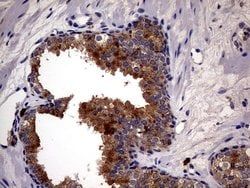
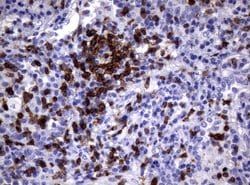
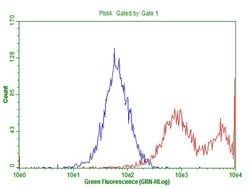
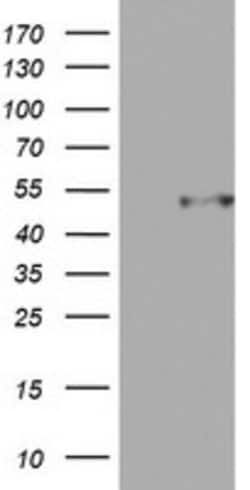
Description
- Reconstitute with PBS (pH 7.3) and recommend to perform another round of desalting process using Product No
- 7KMWCO CRP (C-reactive protein) is a major cyclic, pentameric acute phase protein compound consisting of five identical, noncovalently bound, nonglycosylated subunits
- Eeach subunit is made up of 206 amino acids, and has a molecular weight of 24 kDa
- CRP is produced by the liver, and its plasma levels rise dramatically during inflammatory processes occurring in the body
- CRP is an initiator of classical complement cascade, binds to several nuclear components (chromatin, histones, etc.), plays an important role in innate immunity, and mediates activities associated with pre-immune nonspecific host resistance
- Specifically, there is a 100-1000 fold increase of CRP in response to injury, infection or inflammation
- CRP is opsonic, an initiator of the classical complement cascade, and an activator of monocytes/macrophages
- CRP also binds to several nuclear components including chromatin, histones and snRNP, suggesting that it may play a role as a scavenger during cell necrosis
- CRP is involved in several host defense related functions based on its ability to recognize foreign pathogens and damaged cells of the host, and initiates pathogen elimination by interacting with humoral and cellular effector systems in the blood
- Patients with elevated basal levels of CRP have been shown to be an increased risk for hypertension and cardiovascular disease.