50-167-4755
PFKP Mouse anti-Human, Mouse, Rat, Clone: OTI1D6, liquid, TrueMAB™
Manufacturer: OriGene
Select a Size
| Pack Size | SKU | Availability | Price |
|---|---|---|---|
| Each of 1 | 50-167-4755-Each-of-1 | In Stock | ₹ 20,470.00 |
50-167-4755 - Each of 1
In Stock
Quantity
1
Base Price: ₹ 20,470.00
GST (18%): ₹ 3,684.60
Total Price: ₹ 24,154.60
Antigen
PFKP
Classification
Monoclonal
Concentration
1 mg/mL
Formulation
PBS with 1% BSA, 50% glycerol and 0.02% sodium azide
Gene Accession No.
P47860, Q01813, Q9WUA3
Gene Symbols
Pfkp
Immunogen
Full length human recombit protein of human PFKP produced in HEK293T cell.
Quantity
30 μL
Primary or Secondary
Primary
Target Species
Human, Mouse, Rat
Product Type
Antibody
Isotype
IgG1
Applications
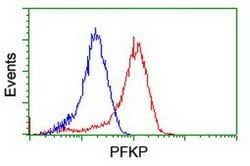
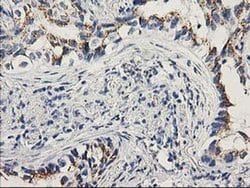
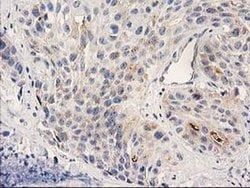
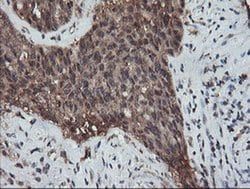
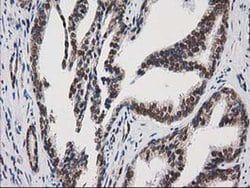
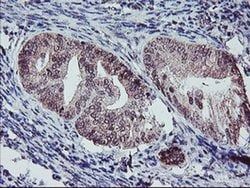
Flow Cytometry, Immunocytochemistry, Immunofluorescence, Immunohistochemistry (Paraffin), Western Blot
Clone
OTI1D6
Conjugate
Unconjugated
Gene
PFKP
Gene Alias
ATP-PFK, PFK-C, PFK-P, PFKF
Host Species
Mouse
Purification Method
Affinity Chromatography
Regulatory Status
RUO
Gene ID (Entrez)
5214, 56421, 60416
Content And Storage
-20° C, Avoid Freeze/Thaw Cycles
Form
Liquid
Related Products


Description
- Protein kinases are enzymes that transfer a phosphate group from a phosphate donor, generally the g phosphate of ATP, onto an acceptor amino acid in a substrate protein
- By this basic mechanism, protein kinases mediate most of the signal transduction in eukaryotic cells, regulating cellular metabolism, transcription, cell cycle progression, cytoskeletal rearrangement and cell movement, apoptosis, and differentiation
- With more than 500 gene products, the protein kinase family is one of the largest families of proteins in eukaryotes
- The family has been classified in 8 major groups based on sequence comparison of their tyrosine (PTK) or serine/threonine (STK) kinase catalytic domains
- The AGC kinase group consists of 63 kinases including the cyclic nucleotide-regulated protein kinase (PKA & PKG) family, the diacylglycerol-activated/phospholipid-dependent protein kinase C (PKC) family, the related to PKA and PKC (RAC/Akt) protein kinase family, the kinases that phosphorylate G protein-coupled receptors family (ARK), and the kinases that phosphorylate ribosomal protein S6 family (RSK).