50-167-6664
TH Monoclonal Antibody (OTI3A7), TrueMAB™, OriGene
Manufacturer: OriGene
Select a Size
| Pack Size | SKU | Availability | Price |
|---|---|---|---|
| Each of 1 | 50-167-6664-Each-of-1 | In Stock | ₹ 44,954.79 |
50-167-6664 - Each of 1
In Stock
Quantity
1
Base Price: ₹ 44,954.79
GST (18%): ₹ 8,091.862
Total Price: ₹ 53,046.652
Antigen
TH
Classification
Monoclonal
Concentration
1 mg/mL
Formulation
PBS with 1% BSA, 50% glycerol and 0.02% sodium azide
Gene Accession No.
P07101
Gene Symbols
TH
Immunogen
Full length human recombit protein of human TH produced in HEK293T cell.
Quantity
100 μL
Primary or Secondary
Primary
Target Species
Human
Product Type
Antibody
Isotype
IgG1
Applications
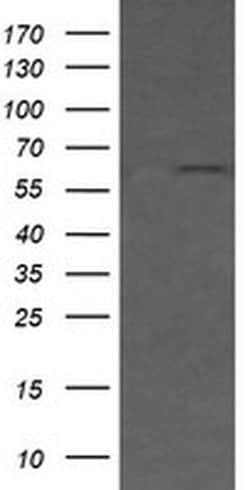
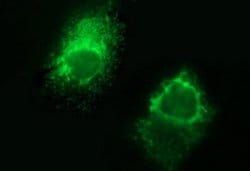
Immunocytochemistry, Immunofluorescence, Western Blot
Clone
OTI3A7
Conjugate
Unconjugated
Gene
TH
Gene Alias
DYT14, DYT5b, TYH
Host Species
Mouse
Purification Method
Affinity Chromatography
Regulatory Status
RUO
Gene ID (Entrez)
7054
Content And Storage
-20° C, Avoid Freeze/Thaw Cycles
Form
Liquid
Related Products



Description
- Tyrosine hydroxylase (TH) is an enzyme involved in the synthesis of catecholamine neurotransmitters dopamine, epinephrine, and norepinephrine
- In all species, catecholamine synthesis is regulated by the interaction of TH with a cofactor, tetrahydrobiopterin (BH4)
- BH4 binds to the TH catalytic domain, resulting in enzymatic activity
- Unlike TH in non-primate species, four human TH mRNA splice variants (hTH1-hTH4) have been isolated
- These variants are identical in their catalytic domain, but differ in their N-terminal, regulatory domains
- TH is also responsible for the conversion of L-tyrosine to L-dopa
- TH plays a key role in the physiology of adrenergic neurons
- The role of TH in the synthesis of catecholamine neurotransmitters suggests a correlation between the enzyme and a number of neuropathogenic diseases including: Parkinson′s disease, schizophrenia, Segawa syndrome, and dystonia, as well as a variety of cardiovascular diseases.