50-168-4450
CIITA Monoclonal Antibody (OTI7B12), TrueMAB™, OriGene
Manufacturer: OriGene
Select a Size
| Pack Size | SKU | Availability | Price |
|---|---|---|---|
| Each of 1 | 50-168-4450-Each-of-1 | In Stock | ₹ 44,954.79 |
50-168-4450 - Each of 1
In Stock
Quantity
1
Base Price: ₹ 44,954.79
GST (18%): ₹ 8,091.862
Total Price: ₹ 53,046.652
Antigen
CIITA
Classification
Monoclonal
Concentration
1 mg/mL
Formulation
PBS with 1% BSA, 50% glycerol and 0.02% sodium azide
Gene Accession No.
P33076
Gene Symbols
CIITA
Immunogen
Human recombit protein fragment corresponding to amino acids 414-724 of human CIITA produced in E.coli.
Quantity
100 μL
Primary or Secondary
Primary
Target Species
Human
Product Type
Antibody
Isotype
IgG1
Applications
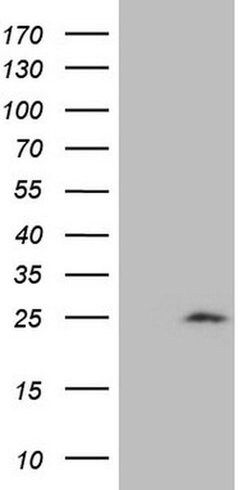
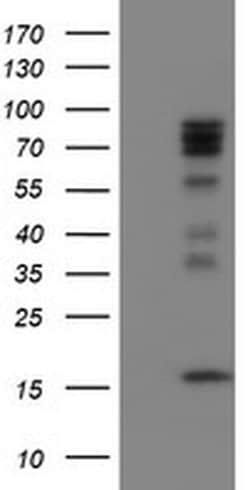
Western Blot
Clone
OTI7B12
Conjugate
Unconjugated
Gene
CIITA
Gene Alias
C2TA, CIITAIV, MHC2TA, NLRA
Host Species
Mouse
Purification Method
Affinity Chromatography
Regulatory Status
RUO
Gene ID (Entrez)
4261
Content And Storage
-20° C, Avoid Freeze/Thaw Cycles
Form
Liquid
Related Products
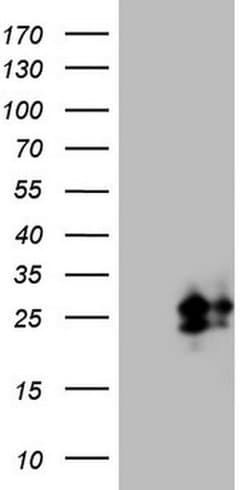
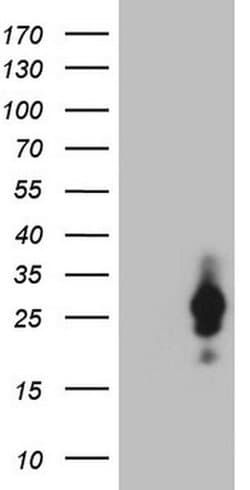
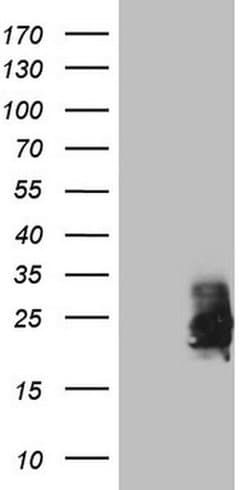
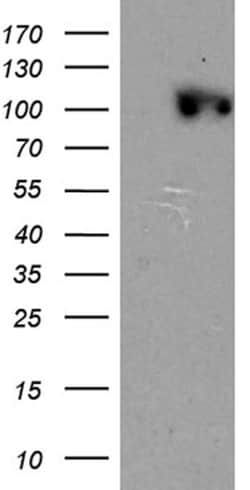


Description
- CIITA contains an acidic transcriptional activation domain, four LRRs (leucine-rich repeats) and a GTP binding domain
- It is located in the nucleus and acts as a positive regulator of class II major histocompatibility complex gene transcription, and is referred to as the "master control factor" for the expression of these genes
- CIITA also binds GTP and uses GTP binding to facilitate its own transport into the nucleus
- Once in the nucleus it does not bind DNA but rather uses an intrinsic acetyltransferase (AT) activity to act in a coactivator-like fashion
- Mutations in this gene have been associated with bare lymphocyte syndrome type II (also known as hereditary MHC class II deficiency or HLA class II-deficient combined immunodeficiency), increased susceptibility to rheumatoid arthritis, multiple sclerosis, and possibly myocardial infarction.