50-168-4663
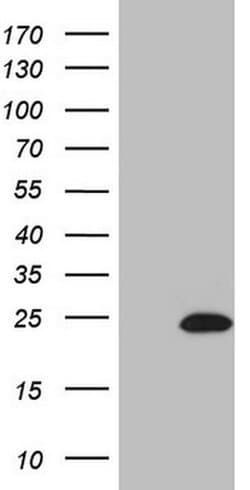
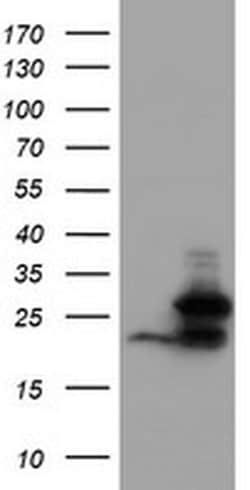
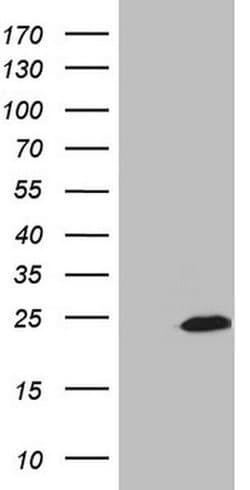
TSEN15 Monoclonal Antibody (OTI3F5), TrueMAB™, OriGene
Manufacturer: OriGene
Select a Size
| Pack Size | SKU | Availability | Price |
|---|---|---|---|
| Each of 1 | 50-168-4663-Each-of-1 | In Stock | ₹ 44,954.79 |
50-168-4663 - Each of 1
In Stock
Quantity
1
Base Price: ₹ 44,954.79
GST (18%): ₹ 8,091.862
Total Price: ₹ 53,046.652
Antigen
TSEN15
Classification
Monoclonal
Concentration
1 mg/mL
Formulation
PBS with 1% BSA, 50% glycerol and 0.02% sodium azide
Gene Accession No.
Q8WW01
Gene Symbols
TSEN15
Immunogen
Full length human recombit protein of human TSEN15 produced in E.coli.
Quantity
100 μL
Primary or Secondary
Primary
Target Species
Human, Rat
Product Type
Antibody
Isotype
IgG1
Applications
Western Blot
Clone
OTI3F5
Conjugate
Unconjugated
Gene
TSEN15
Gene Alias
C1orf19, PCH2F, sen15
Host Species
Mouse
Purification Method
Affinity Chromatography
Regulatory Status
RUO
Gene ID (Entrez)
116461, 289083
Content And Storage
-20° C, Avoid Freeze/Thaw Cycles
Form
Liquid
Related Products
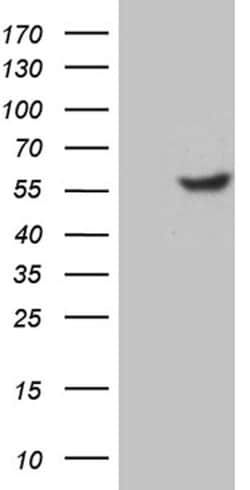
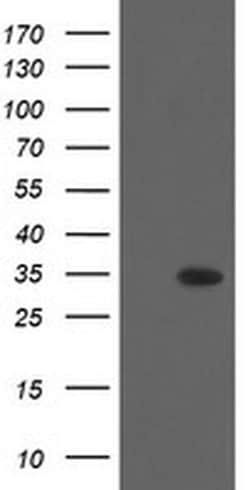

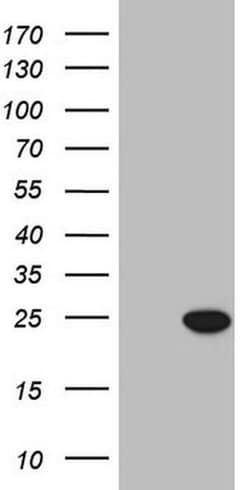
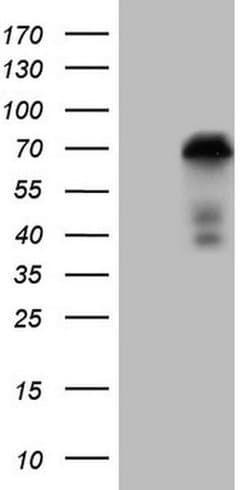
Description
- Non-catalytic subunit of the tRNA-splicing endonuclease complex, a complex responsible for identification and cleavage of the splice sites in pre-tRNA
- It cleaves pre-tRNA at the 5′ and 3′ splice sites to release the intron
- The products are an intron and two tRNA half-molecules bearing 2′,3′ cyclic phosphate and 5′-OH termini
- There are no conserved sequences at the splice sites, but the intron is invariably located at the same site in the gene, placing the splice sites an invariant distance from the constant structural features of the tRNA body
- The tRNA splicing endonuclease is also involved in mRNA processing via its association with pre-mRNA 3′-end processing factors, establishing a link between pre-tRNA splicing and pre-mRNA 3′-end formation, suggesting that the endonuclease subunits function in multiple RNA-processing events.