50-168-4930
CD3 Mouse anti-Human, Clone: UMAB54, lyophilized, UltraMAB™
Manufacturer: OriGene
Select a Size
| Pack Size | SKU | Availability | Price |
|---|---|---|---|
| Each of 1 | 50-168-4930-Each-of-1 | In Stock | ₹ 65,489.76 |
50-168-4930 - Each of 1
In Stock
Quantity
1
Base Price: ₹ 65,489.76
GST (18%): ₹ 11,788.157
Total Price: ₹ 77,277.917
Antigen
CD3
Classification
Monoclonal
Conjugate
Unconjugated
Gene
CD3E
Gene Alias
IMD18; T3E; TCRE; HCD3
Host Species
Mouse
Purification Method
Affinity Chromatography
Regulatory Status
RUO
Gene ID (Entrez)
916
Content And Storage
-20° C, Avoid Freeze/Thaw Cycles
Form
Lyophilized
Applications
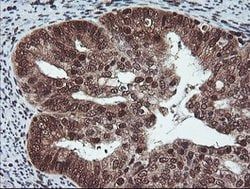
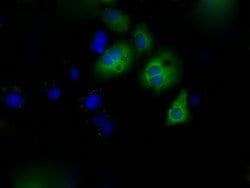
Immunocytochemistry, Immunofluorescence, Immunohistochemistry (Paraffin)
Clone
UMAB54
Formulation
PBS with 8% trehalose and no preservative
Gene Accession No.
P07766
Gene Symbols
CD3E
Immunogen
Full length human recombit protein of human CD3E produced in HEK293T cell.
Quantity
100 μg
Primary or Secondary
Primary
Target Species
Human
Product Type
Antibody
Isotype
IgG2b
Related Products


Description
- CD3 epsilon is part of the CD3 subunit complex which is crucial in transducing antigen-recognition signals into the cytoplasm of T cells and in regulating the cell surface expression of the TCR complex
- T cell activation through the antigen receptor (TCR) involves the cytoplasmic tails of the CD3 subunits CD3 gamma, CD3 delta, CD3 epsilon and CD3 zeta
- These CD3 subunits are structurally related members of the immunoglobulins super family encoded by closely linked genes on human chromosome 11
- The CD3 components have long cytoplasmic tails that associate with cytoplasmic signal transduction molecules and this association is mediated at least in part by a double tyrosine-based motif present in a single copy in the CD3 subunits
- CD3 may play a role in TCR-induced growth arrest, cell survival and proliferation
- The CD3 antigen is present on 68-82% of normal peripheral blood lymphocytes, 65-85% of thymocytes and Purkinje cells in the cerebellum
- It is never expressed on B or NK cells
- Decreased percentages of T lymphocytes may be observed in some autoimmune diseases
- The genes encoding the CD3 epsilon, gamma and delta polypeptides are located on chromosome 11
- Defects in this gene are associated with T cell immunodeficiency and has been linked to Type 1 Diabetes deficiency in women.