50-168-5222
CD68 Mouse anti-Human, Clone: UMAB150, liquid, UltraMAB™
Manufacturer: OriGene
Select a Size
| Pack Size | SKU | Availability | Price |
|---|---|---|---|
| Each of 1 | 50-168-5222-Each-of-1 | In Stock | ₹ 56,721.48 |
50-168-5222 - Each of 1
In Stock
Quantity
1
Base Price: ₹ 56,721.48
GST (18%): ₹ 10,209.866
Total Price: ₹ 66,931.346
Antigen
CD68
Classification
Monoclonal
Concentration
0.5-1.0 mg/mL
Formulation
PBS with 1% BSA, 50% glycerol and 0.02% sodium azide
Gene Accession No.
P34810
Gene Symbols
CD68
Immunogen
Human recombit protein fragment corresponding to amino acids 22-319 of human CD68 produced in SF9 cell.
Quantity
100 μL
Primary or Secondary
Primary
Target Species
Human
Product Type
Antibody
Isotype
IgG1
Applications
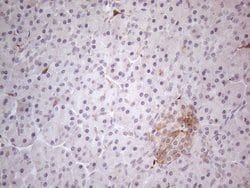
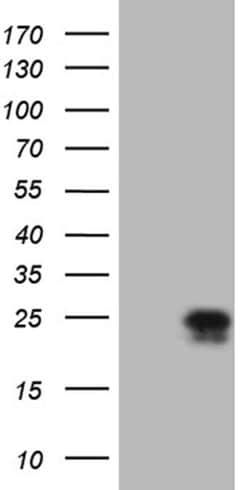
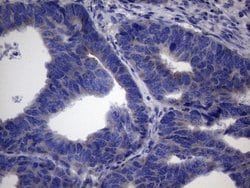
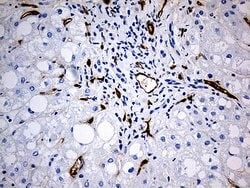
Immunohistochemistry (Paraffin), Western Blot
Clone
UMAB150
Conjugate
Unconjugated
Gene
CD68
Gene Alias
GP110, LAMP4, SCARD1
Host Species
Mouse
Purification Method
Affinity Chromatography
Regulatory Status
RUO
Gene ID (Entrez)
968
Content And Storage
-20° C, Avoid Freeze/Thaw Cycles
Form
Liquid
Related Products



Description
- CD68 (Macrosialin) is a 110 kDa integral membrane glycoprotein predomitly expressed on the intracellular lysomsomes of monocytes and macrophages and to a lesser extent by dendritic cells and peripheral blood granulocytes
- Also, CD68 could play a role in phagocytic activities of tissue macrophages, both in intracellular lysosomal metabolism and extracellular cell-cell and cell-pathogen interactions
- CD68 is expressed by interdigitating reticulum cells in tonsil and some histiocytic lymphoma or histiocytosis, acute myeloid leukemia (AML), and granulocytic sarcoma
- Elevated expression of CD68 has been demonstrated on CD34+ cells in various human maligcies, including several Acute Myeloid Leukemia studies.