50-172-6268
HGS Rabbit anti-Human, Mouse, Polyclonal, Proteintech
Manufacturer: Proteintech Group Inc
Select a Size
| Pack Size | SKU | Availability | Price |
|---|---|---|---|
| Each of 1 | 50-172-6268-Each-of-1 | In Stock | ₹ 44,150.23 |
50-172-6268 - Each of 1
In Stock
Quantity
1
Base Price: ₹ 44,150.23
GST (18%): ₹ 7,947.041
Total Price: ₹ 52,097.271
Antigen
HGS
Classification
Polyclonal
Conjugate
Unconjugated
Gene
HGS
Gene Alias
HGS, HRS, Protein pp110, ZFYVE8
Host Species
Rabbit
Purification Method
Antigen Affinity Chromatography
Regulatory Status
RUO
Gene ID (Entrez)
15239, 9146
Content And Storage
-20°C
Form
Liquid
Applications
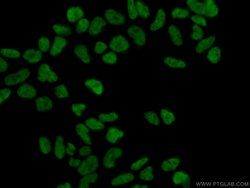
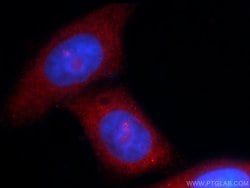
Immunocytochemistry, Immunofluorescence, Immunohistochemistry (Paraffin), Immunoprecipitation, Western Blot
Concentration
0.3 mg/mL
Formulation
PBS with 50% glycerol and 0.1% sodium azide; pH 7.3
Gene Accession No.
O14964, Q99LI8
Gene Symbols
HGS
Immunogen
HGS Fusion Protein Ag0589
Quantity
150 μL
Primary or Secondary
Primary
Target Species
Human, Mouse
Product Type
Antibody
Isotype
IgG
Related Products
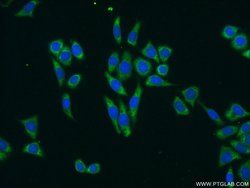
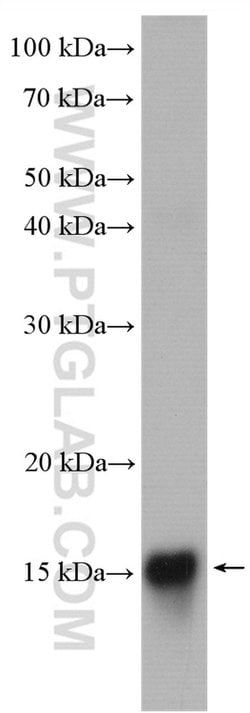
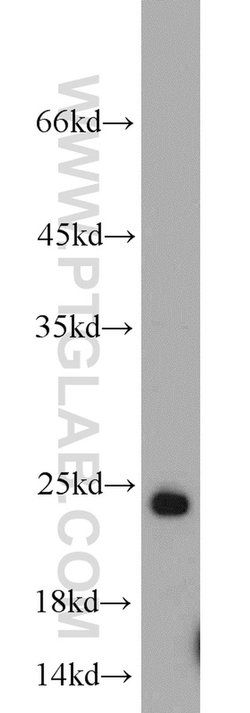
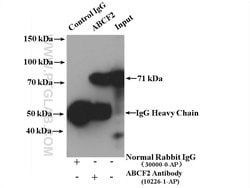


Description
- HGS is involved in intracellular signal transduction mediated by cytokines and growth factors
- When associated with STAM, it suppresses DNA signaling upon stimulation by IL-2 and GM-CSF
- It could be a direct effector of PI3-kinase in vesicular pathway via early endosomes and may regulate trafficking to early and late endosomes by recruiting clathrin
- HGS may concentrate ubiquitinated receptors within clathrin-coated regions
- It is involved in down-regulation of receptor tyrosine kinase via multivesicular body (MVBs) when complexed with STAM
- This complex binds ubiquitin and acts as sorting machinery that recognizes ubiquitinated receptors and transfers them to further sequential lysosomal sorting/trafficking processes
- HGS may contribute to the efficient recruitment of SMADs to the activin receptor complex.