50-172-6752
COPS2/TRIP15 Rabbit anti-Human, Mouse, Polyclonal, Proteintech
Manufacturer: Proteintech Group Inc
Select a Size
| Pack Size | SKU | Availability | Price |
|---|---|---|---|
| Each of 1 | 50-172-6752-Each-of-1 | In Stock | ₹ 44,150.23 |
50-172-6752 - Each of 1
In Stock
Quantity
1
Base Price: ₹ 44,150.23
GST (18%): ₹ 7,947.041
Total Price: ₹ 52,097.271
Antigen
COPS2/TRIP15
Classification
Polyclonal
Conjugate
Unconjugated
Gene
COPS2
Gene Alias
ALIEN, Alien homolog, COPS 2, COPS2, CSN2, SGN2, Signalosome subunit 2, TR interacting protein 15, TRIP 15, TRIP15
Host Species
Rabbit
Purification Method
Antigen Affinity Chromatography
Regulatory Status
RUO
Gene ID (Entrez)
12848, 9318
Content And Storage
-20°C
Form
Liquid
Applications
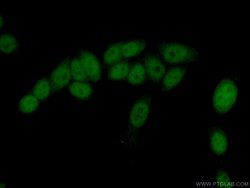
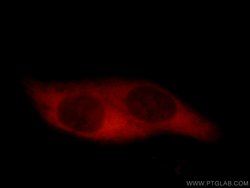
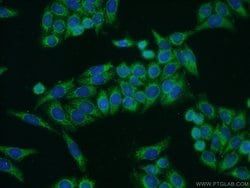
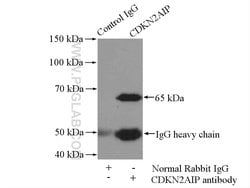
Immunocytochemistry, Immunofluorescence, Immunohistochemistry (Paraffin), Immunoprecipitation, Western Blot
Concentration
0.49 mg/mL
Formulation
PBS with 50% glycerol and 0.1% sodium azide; pH 7.3
Gene Accession No.
P61201, P61202
Gene Symbols
Cops2
Immunogen
COPS2/TRIP15 Fusion Protein Ag1415
Quantity
150 μL
Primary or Secondary
Primary
Target Species
Human, Mouse
Product Type
Antibody
Isotype
IgG
Related Products




Description
- Product No
- 10969-2-AP is a rabbit polyclonal antibody raised against the full-length of human COPS2
- The MW of this protein is 52 kDa, and this antibody specifically recognizes the 52 kDa protein
- Isocitrate dehydrogenases catalyze the oxidative decarboxylation of isocitrate to 2-oxoglutarate
- These enzymes belong to two distinct subclasses, one of which utilizes NAD(+) as the electron acceptor and the other NADP(+)
- Five isocitrate dehydrogenases have been reported: three NAD(+)-dependent isocitrate dehydrogenases, which localize to the mitochondrial matrix, and two NADP(+)-dependent isocitrate dehydrogenases, one of which is mitochondrial and the other predomitly cytosolic
- NAD(+)-dependent isocitrate dehydrogenases catalyze the allosterically regulated rate-limiting step of the tricarboxylic acid cycle
- Each isozyme is a heterotetramer that is composed of two alpha subunits, one beta subunit, and one gamma subunit
- The protein encoded by this gene is the beta subunit of one isozyme of NAD(+)-dependent isocitrate dehydrogenase
- Three alternatively spliced transcript variants encoding different isoforms have been described for this gene.