50-173-0164
CKMT1A Rabbit anti-Human, Mouse, Rat, Polyclonal, Proteintech
Manufacturer: Proteintech Group Inc
Select a Size
| Pack Size | SKU | Availability | Price |
|---|---|---|---|
| Each of 1 | 50-173-0164-Each-of-1 | In Stock | ₹ 44,150.23 |
50-173-0164 - Each of 1
In Stock
Quantity
1
Base Price: ₹ 44,150.23
GST (18%): ₹ 7,947.041
Total Price: ₹ 52,097.271
Antigen
CKMT1A
Classification
Polyclonal
Conjugate
Unconjugated
Gene
CKMT1A
Gene Alias
c, CKMiMi, CKMT, CKMT1, CKMT1A, Mia CK, U MtCK
Host Species
Rabbit
Purification Method
Antigen Affinity Chromatography
Regulatory Status
RUO
Gene ID (Entrez)
548596
Content And Storage
-20°C
Form
Liquid
Applications
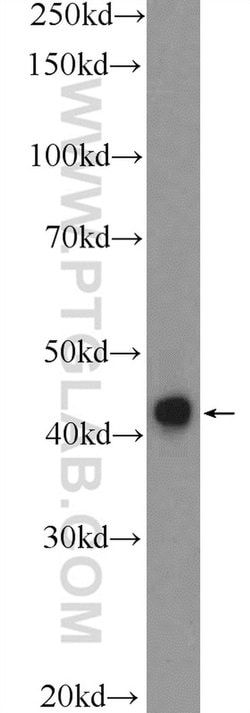
Immunohistochemistry (Paraffin), Immunoprecipitation, Western Blot
Concentration
0.38 mg/mL
Formulation
PBS with 50% glycerol and 0.02% sodium azide; pH 7.3
Gene Accession No.
P12532
Gene Symbols
CKMT1A
Immunogen
CKMT1A Fusion Protein Ag7583
Quantity
150 μL
Primary or Secondary
Primary
Target Species
Human, Mouse, Rat
Product Type
Antibody
Isotype
IgG
Related Products



Description
- Mitochondrial creatine kinase (MtCK) is responsible for the transfer of high energy phosphate from mitochondria to the cytosolic carrier, creatine
- It belongs to the creatine kinase isoenzyme family
- It exists as two isoenzymes, sarcomeric MtCK and ubiquitous MtCK, encoded by separate genes
- Mitochondrial creatine kinase occurs in two different oligomeric forms: dimers and octamers, in contrast to the exclusively dimeric cytosolic creatine kinase isoenzymes
- Many maligt cancers with poor prognosis have shown overexpression of ubiquitous mitochondrial creatine kinase, this may be related to high energy turnover and failure to eliminate cancer cells via apoptosis
- Ubiquitous mitochondrial creatine kinase has 80% homology with the coding exons of sarcomeric mitochondrial creatine kinase.