50-173-0509
UBASH3A Rabbit anti-Human, Mouse, Rat, Polyclonal, Proteintech
Manufacturer: Proteintech Group Inc
Select a Size
| Pack Size | SKU | Availability | Price |
|---|---|---|---|
| Each of 1 | 50-173-0509-Each-of-1 | In Stock | ₹ 44,150.23 |
50-173-0509 - Each of 1
In Stock
Quantity
1
Base Price: ₹ 44,150.23
GST (18%): ₹ 7,947.041
Total Price: ₹ 52,097.271
Antigen
UBASH3A
Classification
Polyclonal
Conjugate
Unconjugated
Gene
UBASH3A
Gene Alias
Cbl interacting protein 4, CLIP4, STS 2, STS2, T cell ubiquitin ligand, TULA, UBASH3A
Host Species
Rabbit
Purification Method
Antigen Affinity Chromatography
Regulatory Status
RUO
Gene ID (Entrez)
309666, 328795, 53347
Content And Storage
-20°C
Form
Liquid
Applications
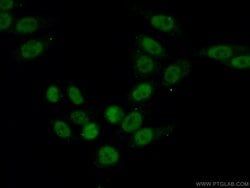
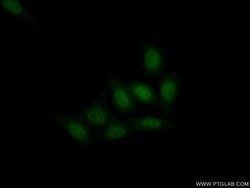
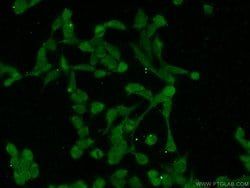
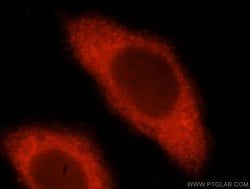
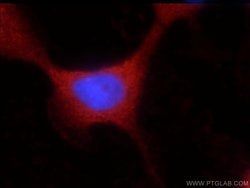
Immunocytochemistry, Immunofluorescence, Immunoprecipitation, Western Blot
Concentration
0.27 mg/mL
Formulation
PBS with 50% glycerol and 0.02% sodium azide; pH 7.3
Gene Accession No.
P57075, Q3V3E1
Gene Symbols
Ubash3a
Immunogen
Peptide
Quantity
150 μL
Primary or Secondary
Primary
Target Species
Human, Mouse, Rat
Product Type
Antibody
Isotype
IgG
Related Products



Description
- This antibody is UBASH3A-specific
- TULA (T cell ubiquitin ligand, UBASH3A, ubiquitin associated and SH3 domain containing A), STS-2 or CLIP4, is a 661 amino acid protein that localizes to both the nucleus and the cytoplasm and contains one SH3 domain and one UBA domain
- Expressed at high levels in thymus, bone marrow, spleen and peripheral blood leukocytes, TULA exists as either a homodimer or a homo-oligomer that interferes with the degradation of receptor-type tyrosine kinases and promotes the accumulation of activated receptors on the cell surface
- Additionally, TULA is part of an EGFR- and Cbl-containing complex that interacts with ubiquitinated proteins
- The gene encoding TULA, which maps to human chromosome 21, may be involved in the pathogenesis of type I diabetes
- Multiple isoforms of TULA are produced due to alternative splicing events.