50-173-3501
CHRFAM7A Rabbit anti-Human, Polyclonal, Proteintech
Manufacturer: Proteintech Group Inc
Select a Size
| Pack Size | SKU | Availability | Price |
|---|---|---|---|
| Each of 1 | 50-173-3501-Each-of-1 | In Stock | ₹ 44,150.23 |
50-173-3501 - Each of 1
In Stock
Quantity
1
Base Price: ₹ 44,150.23
GST (18%): ₹ 7,947.041
Total Price: ₹ 52,097.271
Antigen
CHRFAM7A
Classification
Polyclonal
Conjugate
Unconjugated
Gene
CHRFAM7A
Gene Alias
CHRFAM7A, CHRNA7, CHRNA7 DR1, CHRNA7 FAM7A fusion protein, D 10
Host Species
Rabbit
Purification Method
Antigen Affinity Chromatography
Regulatory Status
RUO
Gene ID (Entrez)
89832
Content And Storage
-20°C
Form
Liquid
Applications
Western Blot
Concentration
0.13 mg/mL
Formulation
PBS with 50% glycerol and 0.02% sodium azide; pH 7.3
Gene Accession No.
Q494W8
Gene Symbols
CHRFAM7A
Immunogen
CHRFAM7A Fusion Protein Ag16151
Quantity
150 μL
Primary or Secondary
Primary
Target Species
Human
Product Type
Antibody
Isotype
IgG
Related Products
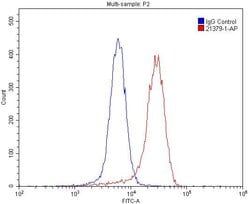
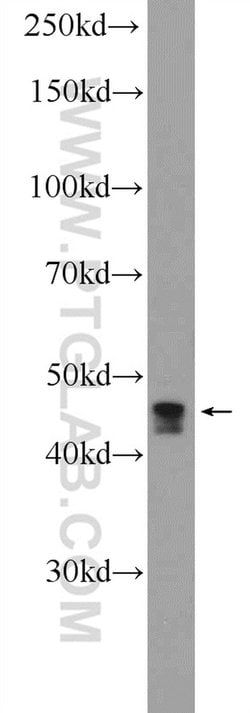


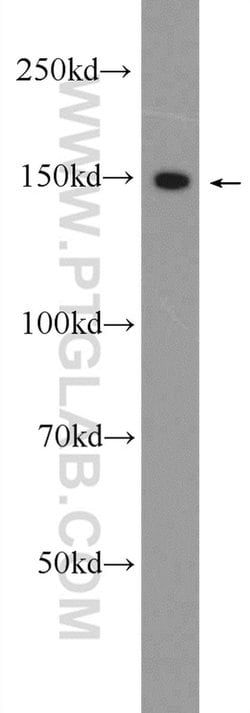
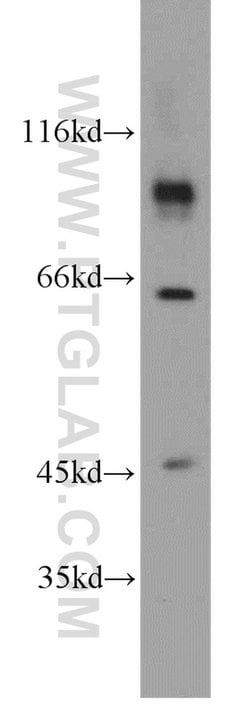
Description
- This antibody, raised against 241-386 amino acids of human CHRFAM7A protein, recognizes both CHRNA7 and CHRFAM7A
- The nicotinic acetylcholine receptors (nAChRs) are members of a superfamily of ligand-gated ion channels that mediate fast signal transmission at synapses
- The family member CHRNA7, which is located on chromosome 15 in a region associated with several neuropsychiatric disorders, is partially duplicated and forms a hybrid with a novel gene from the family with sequence similarity 7 (FAM7A)
- Alternative splicing has been observed, and two variants exist, for this hybrid gene
- The N-terminally truncated products predicted by the largest open reading frames for each variant would lack the majority of the neurotransmitter-gated ion-channel ligand binding domain but retain the transmembrane region that forms the ion channel
- Although current evidence supports transcription of this hybrid gene, translation of the nicotinic acetylcholine receptor-like protein-encoding open reading frames has not been confirmed.