50-173-6690
CD1d Mouse anti-Human, Clone: 1C12F1, Proteintech
Manufacturer: Proteintech Group Inc
Select a Size
| Pack Size | SKU | Availability | Price |
|---|---|---|---|
| Each of 1 | 50-173-6690-Each-of-1 | In Stock | ₹ 44,150.23 |
50-173-6690 - Each of 1
In Stock
Quantity
1
Base Price: ₹ 44,150.23
GST (18%): ₹ 7,947.041
Total Price: ₹ 52,097.271
Antigen
CD1d
Classification
Monoclonal
Concentration
2 mg/mL
Formulation
PBS with 50% glycerol and 0.02% sodium azide; pH 7.3
Gene Accession No.
P15813
Gene Symbols
CD1D
Immunogen
CD1d Fusion Protein Ag11108
Quantity
150 μL
Primary or Secondary
Primary
Target Species
Human
Product Type
Antibody
Isotype
IgG1
Applications
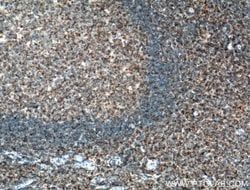
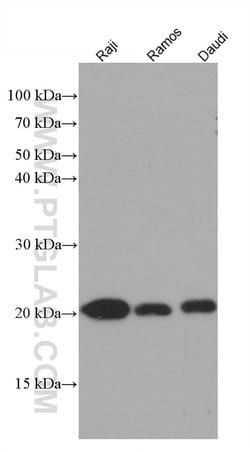
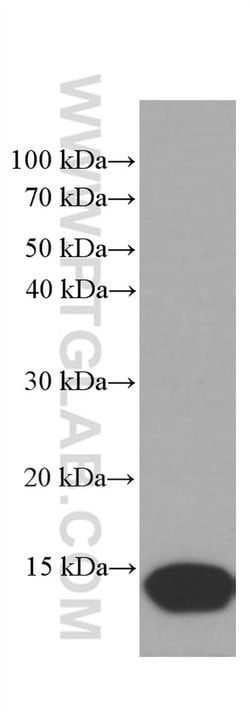
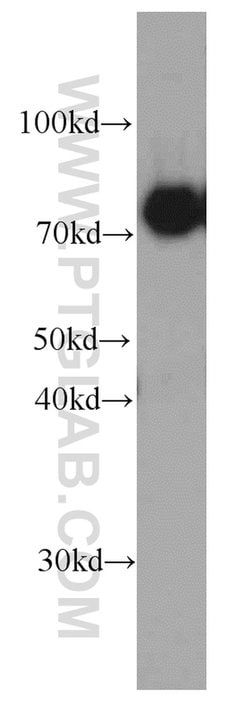
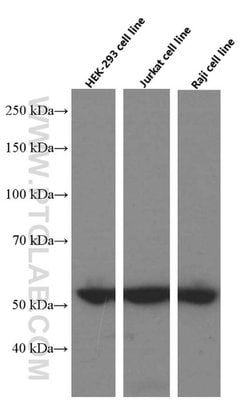
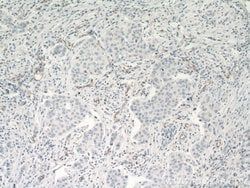
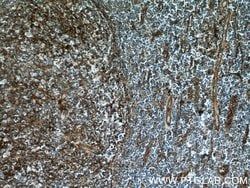
Immunohistochemistry (Paraffin), Western Blot
Clone
1C12F1
Conjugate
Unconjugated
Gene
CD1D
Gene Alias
CD1A, CD1D, CD1d molecule, R3, R3G1
Host Species
Mouse
Purification Method
Protein G
Regulatory Status
RUO
Gene ID (Entrez)
912
Content And Storage
-20°C
Form
Liquid
Related Products
Description
- CD1d is a 49 kDa heavy chain associated with Beta 2 microglobulin on cortical thymocytes
- Beta 2 microglobulin independent expression of CD1d has also been demonstrated on human intestinal epithelial cells
- CD1d is the sole group 2 member of the CD1 family of major histocompatibility (MHC) like glycoproteins
- The CD1d gene encodes a divergent member of the CD1 family of transmembrane glycoproteins, which are structurally related to the major histocompatibility complex (MHC) proteins and form heterodimers with beta-2-microglobulin
- The CD1 proteins mediate the presentation of primarily lipid and glycolipid antigens of self or microbial origin to T cells
- The human genome contains five CD1 family genes organized in a cluster on chromosome 1
- The CD1 family members are thought to differ in their cellular localization and specificity for particular lipid ligands
- The protein encoded by the CD1d gene localizes to late endosomes and lysosomes via a tyrosine-based motif in the cytoplasmic tail
- Diseases associated with CD1D include Mycobacterium Malmoense and Autoimmune Disease.