GPR56 Rabbit anti-Human, Polyclonal, Bioss
Manufacturer: Bioss
Select a Size
| Pack Size | SKU | Availability | Price |
|---|---|---|---|
| Each of 1 | 50-198-1719-Each-of-1 | In Stock | ₹ 38,381.25 |
50-198-1719 - Each of 1
In Stock
Quantity
1
Base Price: ₹ 38,381.25
GST (18%): ₹ 6,908.625
Total Price: ₹ 45,289.875
Antigen
GPR56
Classification
Polyclonal
Conjugate
Unconjugated
Gene
ADGRG1
Gene Alias
7-transmembrane protein with no EGF-like N-terminal domains-1; ADGRG1; ADGRG1 CT; ADGRG1 C-terminal fragment; ADGRG1 NT; ADGRG1 N-terminal fragment; adhesion G protein-coupled receptor G1; Adhesion G-protein coupled receptor G1; BFPP; BPPR; Cyt28; DKFZp781L1398; G protein-coupled receptor 56; GPR56; GPR56 7TM; GPR56 CT; GPR56 C-terminal fragment; GPR56 extracellular subunit; GPR56 NT; GPR56 N-terminal fragment; GPR56 seven-transmembrane subunit; GPR56 subunit alpha; GPR56 subunit beta; G-protein coupled receptor 56; Protein TM7XN1; testicular tissue protein Li 77; TM7LN4; TM7XN1; UNQ540/PRO1083
Host Species
Rabbit
Purification Method
Protein A
Regulatory Status
RUO
Gene ID (Entrez)
9289
Content And Storage
-20°C
Form
Liquid
Applications
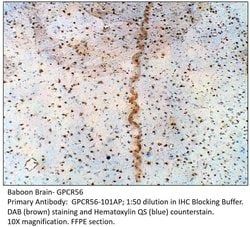
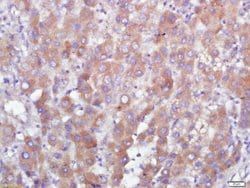
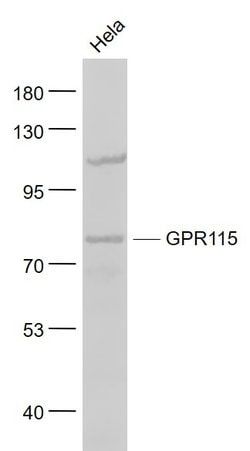
Flow Cytometry, Immunofluorescence, Immunohistochemistry (Paraffin), Western Blot
Concentration
1 μg/mL
Formulation
PBS with 1% BSA, 50% glycerol and 0.09% sodium azide; pH
Gene Accession No.
Q9Y653
Gene Symbols
ADGRG1
Immunogen
KLH conjugated synthetic peptide derived from human GPR56.
Quantity
100 μL
Primary or Secondary
Primary
Target Species
Human
Product Type
Antibody
Isotype
IgG
Related Products


Description
- Description GPR56 is a member of the G protein-coupled receptor family
- The protein contains 7 transmembrane domains and a mucin-like domain in the N-terminal region
- The gene is implicated in the regulation of brain cortical patterning
- The protein binds specifically to transglutaminase 2 in the extracellular space
- Expression of this gene is downregulated in melanoma cell lines, and overexpression of this gene can suppress tumor growth and metastasis
- Mutations in this gene result in bilateral frontoparietal polymicrogyria
- Multiple transcript variants encoding different isoforms have been found for this gene.