Phospho-BAD (Ser91) Rabbit anti-Human, Polyclonal, Bioss
Manufacturer: Bioss
Select a Size
| Pack Size | SKU | Availability | Price |
|---|---|---|---|
| Each of 1 | 50-198-2348-Each-of-1 | In Stock | ₹ 38,381.25 |
50-198-2348 - Each of 1
In Stock
Quantity
1
Base Price: ₹ 38,381.25
GST (18%): ₹ 6,908.625
Total Price: ₹ 45,289.875
Antigen
Phospho-BAD (Ser91)
Classification
Polyclonal
Conjugate
Unconjugated
Gene
BAD
Gene Alias
AI325008; Bad; Bbc2; Bbc6; Bcl2 antagonist of cell death; BCL2 associated agonist of cell death; bcl-2 associated death agonist; Bcl2-antagonist of cell death; BCL2-antagonist of cell death protein; Bcl2-associated agonist of cell death; bcl2-associated death promoter; Bcl-2-binding component 6; BCL2-binding component 6; BCL2-binding protein; BCL2L8; Bcl2-L-8; Bcl-2-like protein 8; BCL-X/BCL-2 binding protein; Bcl-xL/Bcl-2-associated death promoter; BOS_24844; OTTMUSP00000017561; OTTMUSP00000022400
Host Species
Rabbit
Purification Method
Protein A
Regulatory Status
RUO
Gene ID (Entrez)
572
Content And Storage
-20°C
Form
Liquid
Applications
Immunofluorescence, Immunohistochemistry (Paraffin), Western Blot
Concentration
1 μg/mL
Formulation
PBS with 1% BSA, 50% glycerol and 0.09% sodium azide; pH
Gene Accession No.
Q92934
Gene Symbols
BAD
Immunogen
KLH conjugated synthetic phosphopeptide derived from human BAD around the phosphorylation site of Ser91.
Quantity
100 μL
Primary or Secondary
Primary
Target Species
Human
Product Type
Antibody
Isotype
IgG
Related Products




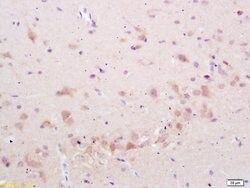
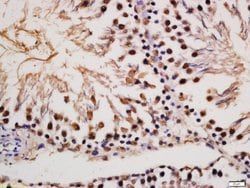
Description
- The protein encoded by BAD is a member of the BCL-2 family
- BCL-2 family members are known to be regulators of programmed cell death
- This protein positively regulates cell apoptosis by forming heterodimers with BCL-xL and BCL-2, and reversing their death repressor activity
- Proapoptotic activity of this protein is regulated through its phosphorylation
- Protein kinases AKT and MAP kinase, as well as protein phosphatase calcineurin were found to be involved in the regulation of this protein
- Alternative splicing of this gene results in two transcript variants which encode the same isoform.