GSTK1/Glutathione S Transferase kappa 1 Rabbit anti-Human, Polyclonal, Bioss
Manufacturer: Bioss
Select a Size
| Pack Size | SKU | Availability | Price |
|---|---|---|---|
| Each of 1 | 50-198-2863-Each-of-1 | In Stock | ₹ 38,381.25 |
50-198-2863 - Each of 1
In Stock
Quantity
1
Base Price: ₹ 38,381.25
GST (18%): ₹ 6,908.625
Total Price: ₹ 45,289.875
Antigen
GSTK1/Glutathione S Transferase kappa 1
Classification
Polyclonal
Conjugate
Unconjugated
Gene
GSTK1
Gene Alias
0610025I19Rik; AW260476; DsbA-L; glutathione S-transferase class kappa; glutathione S-transferase k1; Glutathione S-transferase kappa 1; Glutathione S-transferase subunit 13; glutathione S-transferase subunit 13 homolog; glutathione S-transferase, mitochondrial; GST; GST 13-13; GST class-kappa; GST13; GST13-13; Gstk1; GSTK1-1; GSTkappa; HDCMD47P; hGSTK1; mGSTK1; rGSTK1
Host Species
Rabbit
Purification Method
Protein A
Regulatory Status
RUO
Gene ID (Entrez)
373156
Content And Storage
-20°C
Form
Liquid
Applications
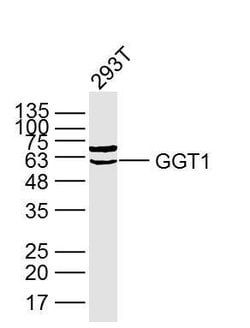
Immunofluorescence, Immunohistochemistry (Paraffin), Western Blot
Concentration
1 μg/mL
Formulation
PBS with 1% BSA, 50% glycerol and 0.09% sodium azide; pH
Gene Accession No.
Q9Y2Q3
Gene Symbols
GSTK1
Immunogen
KLH conjugated synthetic peptide derived from human GSTK1/Glutathione S Transferase kappa 1.
Quantity
100 μL
Primary or Secondary
Primary
Target Species
Human
Product Type
Antibody
Isotype
IgG
Related Products

Description
- GSTK1 encodes a member of the kappa class of the glutathione transferase superfamily of enzymes that function in cellular detoxification
- The encoded protein is localized to the peroxisome and catalyzes the conjugation of glutathione to a wide range of hydrophobic substates facilitating the removal of these compounds from cells
- Alternative splicing results in multiple transcript variants.