CCL19/MIP-3 beta Rabbit anti-Human, Polyclonal, Bioss
Manufacturer: Bioss
Select a Size
| Pack Size | SKU | Availability | Price |
|---|---|---|---|
| Each of 1 | 50-198-4742-Each-of-1 | In Stock | ₹ 38,381.25 |
50-198-4742 - Each of 1
In Stock
Quantity
1
Base Price: ₹ 38,381.25
GST (18%): ₹ 6,908.625
Total Price: ₹ 45,289.875
Antigen
CCL19/MIP-3 beta
Classification
Polyclonal
Conjugate
Unconjugated
Gene
Ccl19
Gene Alias
beta chemokine exodus-3; Beta-chemokine exodus-3; CC chemokine ligand 19; C-C motif chemokine; C-C motif chemokine 19; C-C motif chemokine ligand 19; CCL19; chemokine (C-C motif) ligand 19; chemokine CCL19; CK beta-11; CKb11; EBI1 ligand chemokine; EBI-1 ligand chemokine; EBI1-ligand chemokine; EBV-induced molecule 1 ligand chemokine; ELC; Epstein-Barr virus-induced molecule 1 ligand chemokine; exodus-3; Macrophage inflammatory protein 3 beta; macrophage inflammatory protein 3-beta; MIP3B; MIP-3b; MIP-3-beta; M-MIP-3-beta; Scya19; small inducible cytokine A19; small inducible cytokine subfamily A (Cys-Cys), member 19; Small-inducible cytokine A19
Host Species
Rabbit
Purification Method
Protein A
Regulatory Status
RUO
Gene ID (Entrez)
6363
Content And Storage
-20°C
Form
Liquid
Applications
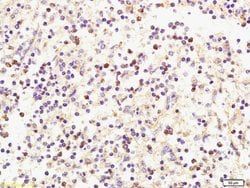
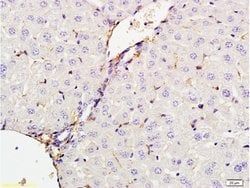
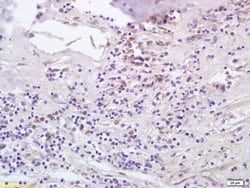
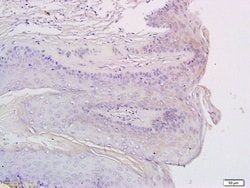
Immunofluorescence, Immunohistochemistry (Paraffin), Western Blot
Concentration
1 μg/mL
Formulation
PBS with 1% BSA, 50% glycerol and 0.09% sodium azide; pH
Gene Accession No.
Q99731
Gene Symbols
Ccl19
Immunogen
KLH conjugated synthetic peptide derived from mouse CCL19.
Quantity
100 μL
Primary or Secondary
Primary
Target Species
Human
Product Type
Antibody
Isotype
IgG
Related Products



Description
- CCL19, also known as MIP-3 beta (Macrophage Inflammatory Protein 3 beta), is a member of the CC- subfamily of chemokines
- It is most closely related to CCL21, with which it shares 32% amino acid sequence homology
- CCL19 and CCL21 are expressed mainly by stromal cells in the T cell-rich zones of lymph nodes
- They are critical mediators of the homeostatic trafficking of naive T cells and activated dendritic cells into the secondary lymphoid organs
- CCL19 and CCL21 also play a role in T cell priming and activation, as well as the recruitment of lymphocytes to inflamed tissue
- Both proteins signal via the G protein-coupled receptor, CCR7, which is expressed on T cells and mature dendritic cells
- Although CCL19 and CCL21 both exhibit the same affinity for CCR7, only the binding of CCL19 results in the desensitization and internalization of the receptor.