CD97 Rabbit anti-Human, Polyclonal, Bioss
Manufacturer: Bioss
Select a Size
| Pack Size | SKU | Availability | Price |
|---|---|---|---|
| Each of 1 | 50-198-4792-Each-of-1 | In Stock | ₹ 38,381.25 |
50-198-4792 - Each of 1
In Stock
Quantity
1
Base Price: ₹ 38,381.25
GST (18%): ₹ 6,908.625
Total Price: ₹ 45,289.875
Antigen
CD97
Classification
Polyclonal
Conjugate
Unconjugated
Gene
ADGRE5
Gene Alias
AA409984; ADGRE5; adhesion G protein-coupled receptor E5; CD97; CD97 antigen; CD97 antigen subunit alpha; CD97 antigen subunit beta; CD97 molecule; EGF-TM7 receptor; Leukocyte antigen CD97; seven transmembrane helix receptor; seven-span transmembrane protein; seven-transmembrane, heterodimeric receptor associated with inflammation; TM7LN1
Host Species
Rabbit
Purification Method
Protein A
Regulatory Status
RUO
Gene ID (Entrez)
976
Content And Storage
-20°C
Form
Liquid
Applications
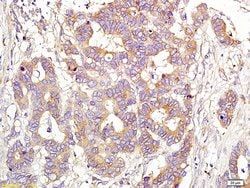
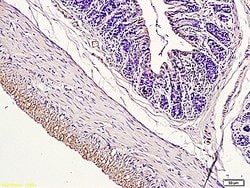
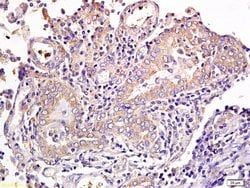
Immunofluorescence, Immunohistochemistry (Paraffin), Western Blot
Concentration
1 μg/mL
Formulation
PBS with 1% BSA, 50% glycerol and 0.09% sodium azide; pH
Gene Accession No.
P48960
Gene Symbols
ADGRE5
Immunogen
KLH conjugated synthetic peptide derived from human CD97.
Quantity
100 μL
Primary or Secondary
Primary
Target Species
Human
Product Type
Antibody
Isotype
IgG
Related Products




Description
- CD97 is a G-protein-coupled seven-span transmembrane adhesive receptor that is constitutively expressed on granulocytes and monocytes and rapidly upregulated on T and B cells upon activation
- CD97 is produced in alternatively spliced forms and its cellular ligand is CD55 (DAF), which protects various cell types from complement-mediated damage
- Interaction of CD97 on leukocytes and CD55 on vessel cells probably facilitate leukocyte activation and migration into the tissues, similarly, CD97 seems to play a role in tumour migration and invasiveness
- CD97 is involved in T cell regulation and peripheral granulocyte homeostasis.