CLEC5A Rabbit anti-Human, Polyclonal, Bioss
Manufacturer: Bioss
Select a Size
| Pack Size | SKU | Availability | Price |
|---|---|---|---|
| Each of 1 | 50-198-4883-Each-of-1 | In Stock | ₹ 38,381.25 |
50-198-4883 - Each of 1
In Stock
Quantity
1
Base Price: ₹ 38,381.25
GST (18%): ₹ 6,908.625
Total Price: ₹ 45,289.875
Antigen
CLEC5A
Classification
Polyclonal
Conjugate
Unconjugated
Gene
CLEC5A
Gene Alias
CLEC5A; CLECSF5; C-type (calcium dependent, carbohydrate-recognition domain) lectin, superfamily member 5; C-type lectin domain family 5 member A; C-type lectin domain family 5, member A; C-type lectin superfamily member 5; Ly100; MDL1; MDL-1; Myeloid DAP12-associating lectin 1; myeloid DAP12-associating lectin-1; type II transmembrane protein MDL-1
Host Species
Rabbit
Purification Method
Protein A
Regulatory Status
RUO
Gene ID (Entrez)
23601
Content And Storage
-20°C
Form
Liquid
Applications
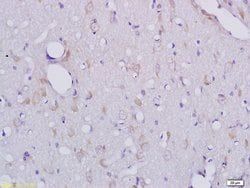
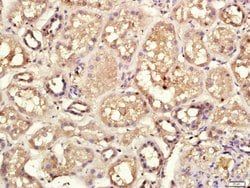
ELISA, Flow Cytometry, Immunofluorescence, Immunohistochemistry (Paraffin), Western Blot
Concentration
1 μg/mL
Formulation
PBS with 1% BSA, 50% glycerol and 0.09% sodium azide; pH
Gene Accession No.
Q9NY25
Gene Symbols
CLEC5A
Immunogen
KLH conjugated synthetic peptide derived from mouse CLEC5A.
Quantity
100 μL
Primary or Secondary
Primary
Target Species
Human
Product Type
Antibody
Isotype
IgG
Related Products



Description
- Functions as a positive regulator of osteoclastogenesis
- Cell surface receptor that signals via TYROBP
- Regulates inflammatory responses
- Acts as a key regulator of synovial injury and bone erosion during autoimmune joint inflammation
- Critical macrophage receptor for dengue virus serotypes 1-4
- The binding of dengue virus to CLEC5A triggers signaling through the phosphylation of TYROBP, this interaction does not result in viral entry, but stimulates proinflammatory cytokine release.