50-245-836
Vimentin Monoclonal Antibody (V9), eFluor™ 615, eBioscience™, Invitrogen™
Manufacturer: Invitrogen
Select a Size
| Pack Size | SKU | Availability | Price |
|---|---|---|---|
| Each of 1 | 50-245-836-Each-of-1 | In Stock | ₹ 41,474.00 |
50-245-836 - Each of 1
In Stock
Quantity
1
Base Price: ₹ 41,474.00
GST (18%): ₹ 7,465.32
Total Price: ₹ 48,939.32
Antigen
Vimentin
Classification
Monoclonal
Concentration
0.2 mg/mL
Formulation
PBS with 0.09% sodium azide; pH 7.2
Gene Accession No.
P08670, P09654, P31000
Gene Symbols
Vim
Purification Method
Affinity chromatography
Regulatory Status
RUO
Gene ID (Entrez)
420519, 477991, 7431, 81818
Content And Storage
4° C, store in dark, DO NOT FREEZE!
Form
Liquid
Applications
Immunocytochemistry, Immunohistochemistry (Frozen), Immunohistochemistry (Paraffin)
Clone
V9
Conjugate
eFluor 615
Gene
Vim
Gene Alias
cb28; class-III intermediate microfilament; CTRCT30; epididymis luminal protein 113; FLJ36605; HEL113; intermediate filament; intermediate filament protein; RP11-124N14.1; similar to vimentin; VIM; VIME; Vimentin; vimentin C-terminus
Host Species
Mouse
Quantity
100 μg
Primary or Secondary
Primary
Target Species
Canine, Chicken, Human, Rat
Product Type
Antibody
Isotype
IgG1 κ
Related Products




Description
- Description: The V9 monoclonal antibody recognizes human Vimentin, a 57 kDa protein that functions as a structural component of intermediate filaments
- Vimentin is expressed in cells derived from the mesenchyme but also in specific populations such as radial glia and immature glial cells, as well as pancreatic precursor cells
- It is proposed to be a marker of cardiac differentiation
- In neural cells, vimentin expression is gradually replaced by neurofilaments
- Reports have also shown surface expression of vimentin on activated macrophages, platelets, as well as apoptotic T cells and neutrophils
- This antibody also recognizes canine (dog), rat and chicken vimentin but does not recognize mouse vimentin
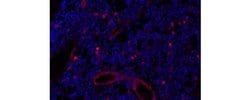
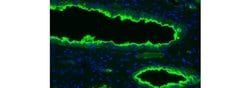
- Applications Reported: This V9 antibody has been reported for use in immunocytochemistry and immunohistochemical staining of frozen (IHC-F) and formalin-fixed paraffin embedded tissue sections (IHC-P)
- Applications Tested: This V9 antibody has been tested by immunocytochemistry on fixed and permeabilized C6 cells at less than or equal to 1 μg/mL
- It is recommended that this antibody be carefully titrated for optimal performance in the assay of interest
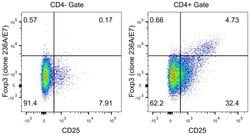
- This product has not been validated for flow cytometric analysis
- Filter Recommendation: When using this eFluor™ 615 antibody conjugate, we recommend a filter that will capture the 615 emission wavelength (for example, Excitation 560/55, 585LP, Emission 645/75)
- Vimentin is a developmentally regulated intermediate filament protein (IFP) found in cells of mesenchymal origin
- It is believed to be involved with the intracellular transport of proteins between the nucleus and plasma membrane
- Unlike other IFP proteins, vimentin is expressed, along with desmin, during the early stages of cellular development
- During the development process, vimentin is exchanged for new, tissue-specific IFPs
- Vimentin has been implicated to be involved in the rate of steroid synthesis via its role as a storage network for steroidogenic cholesterol containing lipid droplets
- Vimentin phosphorylation by a protein kinase causes the breakdown of intermediate filaments and activation of an ATP and myosin light chain dependent contractile event
- This results in cytoskeletal changes that facilitate the interaction of the lipid droplets within mitochondria, and subsequent transport of cholesterol to the organelles leading to an increase in steroid synthesis.