500P247BT25
IL-28A Polyclonal Antibody, Biotin, PeproTech®, Invitrogen™
Manufacturer: Fischer Scientific
Select a Size
| Pack Size | SKU | Availability | Price |
|---|---|---|---|
| Each of 1 | 500P247BT25-Each-of-1 | In Stock | ₹ 20,203.00 |
500P247BT25 - Each of 1
In Stock
Quantity
1
Base Price: ₹ 20,203.00
GST (18%): ₹ 3,636.54
Total Price: ₹ 23,839.54
Antigen
IL-28A
Classification
Polyclonal
Conjugate
Biotin
Gene
IFNL2
Gene Alias
cytokine Zcyto20; EG330496; Ifnl2; IFN-lambda2; IFN-lambda-2; Il28a; IL-28A; ILN; interferon lambda 2; interferon lambda-2; interferon, lambda 2; interferon-lambda 2; interferon-lambda2; Interleukin; interleukin 28A; interleukin 28A (interferon, lambda 2); interleukin-28A; ZCYTO20
Host Species
Rabbit
Purification Method
Antigen affinity chromatography
Regulatory Status
RUO
Gene ID (Entrez)
282616
Content And Storage
-20°C
Applications
ELISA, Western Blot
Concentration
0.1-1.0 mg/mL
Formulation
PBS with no preservative
Gene Accession No.
Q8IZJ0
Gene Symbols
IFNL2
Immunogen
E.coli-derived Recombinant Human IFN-lambda2
Quantity
25 μg
Primary or Secondary
Primary
Target Species
Human
Form
Lyophilized
Related Products


Description
- AA Sequence of recombinant protein: PVARLHGALP DARGCHIAQF KSLSPQELQA FKRAKDALEE SLLLKDCRCH SRLFPRTWDL RQLQVRERPM ALEAELALTL KVLEATADTD PALVDVLDQP LHTLHHILSQ FRACIQPQPT AGPRTRGRLH HWLYRLQEAP KKESPGCLEA SVTFNLFRLL TRDLNCVASG DLCV
- Preparation: Produced from sera of rabbits immunized with highly pure Recombinant Human IFN-lambda2
- Anti-Human IFN-lambda2-specific antibody was purified by affinity chromatography and then biotinylated
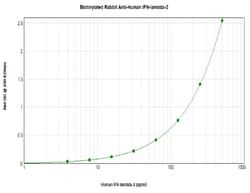
- Sandwich ELISA: To detect Human IFN-lambda2 by sandwich ELISA (using 100 μL/well antibody solution) a concentration of 0.25-1.0 μg/mL of this antibody is required
- This biotinylated polyclonal antibody, in conjunction with PeproTech Polyclonal Anti-Human IFN-lambda2 (500-P247) as a capture antibody, allows the detection of at least 0.2-0.4 ng/well of Recombinant Human IFN-lambda2
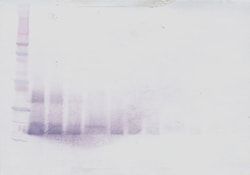
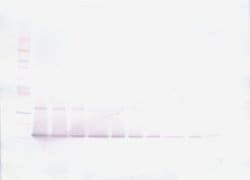
- Western Blot: To detect Human IFN-lambda2 by Western Blot analysis this antibody can be used at a concentration of 0.1-0.2 μg/mL
- When used in conjunction with compatible secondary reagents, the detection limit for Recombinant Human IFN-lambda2 is 1.5-3.0 ng/lane, under either reducing or non-reducing conditions
- 500-P247BT-1MG will be provided as 2 x 500 μg IL-28A belongs to the IFN lambda family, a novel family of cytokines within the IL-10 superfamily
- The three members of this family are IL-29 (IFN lambda 1), IL-28A (IFN lambda 2), and IL-28B (IFN lambda 3), and are also known as the type III Interferons.The IFN lambdas signal through a heterodimeric receptor of which one subunit, IL-10R2, is shared with other members of the superfamily
- The second subunit, IFN lambda R1 or IL-28R alpha, is unique to the IFN lambdas
- Signaling occurs through the Jak/STAT pathway in a similar manner as the type I IFN (IFN alpha/beta) and activates many of the same genes despite low sequence homology between the cytokines and receptors in the two families
- Both IFN families display antiviral activity through the induction of antiviral protein production in target cells and the upregulation of MHC class I expression
- These proteins also exhibit antiproliferative and antitumor effects, making them a possible alternative to IFN alpha cancer therapies
- Unlike the type I IFN, which are able to stimulate most cells, response to IFN lambda stimulation appears to be limited to dendritic and some tumor cells due to the limited expression of IFN lambda R1
- Another notable difference is the ability of the IFN lambda stimulation to drive dendritic cells towards the production of CD4+CD25+FoxP3+ regulatory T cells, suggesting a possible immunoregulatory role