62-989-182
GARP Monoclonal Antibody (YGIC86), Super Bright™ 436, eBioscience™, Invitrogen™
Manufacturer: eBioscience
Select a Size
| Pack Size | SKU | Availability | Price |
|---|---|---|---|
| Each of 1 | 62-989-182-Each-of-1 | In Stock | ₹ 38,448.00 |
62-989-182 - Each of 1
In Stock
Quantity
1
Base Price: ₹ 38,448.00
GST (18%): ₹ 6,920.64
Total Price: ₹ 45,368.64
Antigen
GARP
Classification
Monoclonal
Concentration
0.2 mg/mL
Formulation
PBS with BSA and 0.09% sodium azide; pH 7.2
Gene Accession No.
G3XA59
Gene Symbols
LRRC32
Purification Method
Affinity chromatography
Regulatory Status
RUO
Gene ID (Entrez)
434215
Content And Storage
4° C, store in dark, DO NOT FREEZE!
Form
Liquid
Applications
Flow Cytometry
Clone
YGIC86
Conjugate
Super Bright 436
Gene
LRRC32
Gene Alias
AI426318; D11S833E; D11S833Eh; D7H11S833E; EG434215; Garp; garpin; Glycoprotein A repetitions predominant; leucine rich repeat containing 32; leucine-rich repeat-containing protein 32; Lrrc32; Transforming growth factor beta activator LRRC32
Host Species
Rat
Quantity
100μg
Primary or Secondary
Primary
Target Species
Mouse
Product Type
Antibody
Isotype
IgG2a κ
Related Products



Description
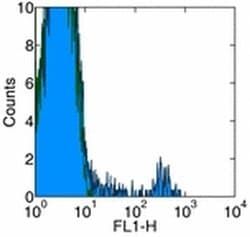
- The YGIC86 monoclonal antibody reacts with mouse Glycoprotein A Repetitions Predomit (GARP, also known as Lrrc32 or Garpin)
- GARP is an approximately 80 kDa glycoprotein that is expressed on the cell surface
- Using northern blot, RT-PCR or microarray anal GARP, also known as leucine rich repeat containing 32, is a type I membrane protein with twenty-two leucine-rich repeats and a short intracytoplasmic region
- GARP was identified based on the analysis of gene expression profiling of Treg and Th cells following TCR stimulation
- Since GARP is expressed in CD4+, CD25+, FoxP3+ cells (Tregs), it may be a candidate for cell surface marker for Treg cells.