OPRM1 Recombinant Rabbit Monoclonal Antibody (13H5L13), Invitrogen™
Manufacturer: Invitrogen
Select a Size
| Pack Size | SKU | Availability | Price |
|---|---|---|---|
| Each of 1 | 70-400-9-Each-of-1 | In Stock | ₹ 35,511.00 |
70-400-9 - Each of 1
In Stock
Quantity
1
Base Price: ₹ 35,511.00
GST (18%): ₹ 6,391.98
Total Price: ₹ 41,902.98
Antigen
OPRM1
Classification
Recombinant Monoclonal
Concentration
0.5 mg/mL
Formulation
PBS with 0.09% sodium azide; pH 7.4
Gene Accession No.
P33535, P35372
Gene Symbols
OPRM1
Immunogen
Peptide corresponding to Rat MOR1 aa 386-398 and human MOR1 aa 388-400
Quantity
200 μL
Primary or Secondary
Primary
Target Species
Human, Rat
Form
Liquid
Applications
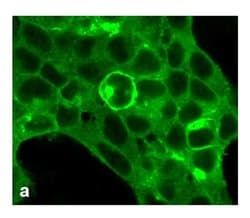
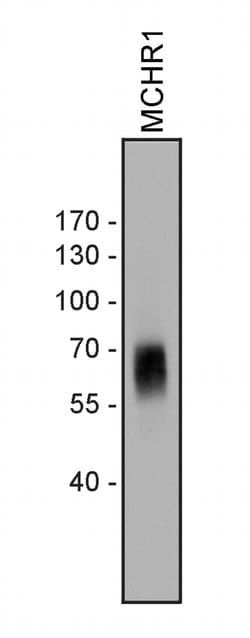
Immunocytochemistry, Immunohistochemistry, Western Blot
Clone
13H5L13
Conjugate
Unconjugated
Gene
OPRM1
Gene Alias
hMOP; KIAA0403; LMOR; MOP; MOP receptor; MOP-R; Mor; MOR1; M-OR-1; MOR-1; MOR-1C; MOR-1O; MORA; Mu opiate receptor; mu opioid receptor; mu opioid receptor hMOR-1a; mu opioid receptor splice variant mMOR-1Z; mu opioid receptor splice variant rMOR-1S; mu opioid receptor splice variant rMOR-1Z; mu-opioid receptor; muOR; MUOR1; mu-type opioid receptor; Opioid mu receptor; Opioid Receptor; opioid receptor B; opioid receptor mu 1; opioid receptor, mu 1; OPRM; Oprm1; Oprrm1; OTTHUMP00000017463; Ror-b
Host Species
Rabbit
Purification Method
Protein A
Regulatory Status
RUO
Gene ID (Entrez)
25601, 4988
Content And Storage
Store at 4°C short term. For long term storage, store at -20°C, avoiding freeze/thaw cycles.
Isotype
IgG
Related Products



Description
- Recombinant rabbit monoclonal antibodies are produced using in vitro expression systems
- Recombinant antibodies are produced using specific genes that code for the desired antibodies
- These genes are cloned into an expression vector and expressed in vitro
- The advantages of recombinant antibodies include better specificity and lot-to-lot consistency
- It is recommended that the antibody be carefully titrated for optimal performance in the assay of interest
- The OPRM1 gene encodes the mu opioid receptor, which is the primary site of action for the most commonly used opioids, including morphine, heroin, fentanyl, and methadone
- It is also the primary receptor for endogenous opioid peptides beta-endorphin and the enkephalins
- The OPRM1 receptor is a membrane of the G protein-coupled receptor family
- There are at least 3 types of opioid receptors, mu, kappa, and delta, each with a distinct pharmacologic profile.