NK1.1 Monoclonal Antibody (PK136), eBioscience™, Invitrogen™
Mouse Monoclonal Antibody
Manufacturer: Fischer Scientific
The price for this product is unavailable. Please request a quote
Antigen
NK1.1
Concentration
0.5 mg/mL
Classification
Monoclonal
Form
Liquid
Regulatory Status
RUO
Formulation
PBS with 0.09% sodium azide; pH 7.2
Gene Alias
AI462337; CD161; CD161 antigen-like family member B; CD161 antigen-like family member C; CD161b; CD161c; EMBL:AAQ11375.1}; Inhibitory receptor NKR-P1B; killer cell lectin-like receptor subfamily A member 1C; killer cell lectin-like receptor subfamily B member 1B; killer cell lectin-like receptor subfamily B member 1B allele A; Killer cell lectin-like receptor subfamily B member 1B allele B; killer cell lectin-like receptor subfamily B member 1B allele C; killer cell lectin-like receptor subfamily B member 1C; killer cell lectin-like receptor subfamily B member 1D; killer cell lectin-like receptor subfamily B member 1F; KLRB1; Klrb1b; klrb1b {ECO:0000312; Klrb1c; Klrb1d; Klrb1f; klrb1f {ECO:0000250; Ly55; Ly-55; Ly55b; ly-55b; Ly55c; ly-55c; Ly55d; Ly-55d; Ly59; Ly-59; lymphocyte antigen 55 complex, locus B; lymphocyte antigen 55 complex, locus C; lymphocyte antigen 55 complex, locus D; lymphocyte antigen 55b; lymphocyte antigen 55c; Lymphocyte antigen 55d; lymphocyte antigen 59; MGC163757; MGC163759; natural killer cell receptor protein NKR-P1B; natural killer cell receptor protein NKR-P1C; natural killer cell receptor-P1; natural killer cell surface protein NKR-P1B allele B6; Natural killer cell surface protein NKR-P1B allele RNK/SD/BN/F344; natural killer cell surface protein NKR-P1B allele SJL/BALB; natural killer cell surface protein NKR-P1B allele TO; natural killer cell surface protein NKR-P1F; Natural killer cell surface protein P1-40; natural killer cell-associated antigen 1; natural killer cells; nk cells; Nk1; Nk-1; NK1.1; Nk1.2; Nk-1.2; NKRP1; NK-RP1; NKR-P1 34; NKR-P1 40; NKR-P1.9; NKRP140; Nkrp1b; NKR-P1B; Nkrp1-b; NKR-P1B protein; Nkrp1c; NKR-P1C; Nkrp1d; NKR-P1D; Nkrp1f; NKR-P1F; RGD:2975}; UniProtKB:Q8VD98}
Gene Symbols
Klrb1b, Klrb1c
Primary or Secondary
Primary
Content And Storage
4° C
Clone
PK136
Applications
Flow Cytometry, Immunoprecipitation
Conjugate
Unconjugated
Host Species
Mouse
Target Species
Mouse
Gene Accession No.
P27812, P27814
Gene ID (Entrez)
17059, 80782
Isotype
IgG2a κ
Purification Method
Affinity chromatography
Product Type
Antibody
Related Products

Description
- Description: The PK136 monoclonal antibody reacts with mouse NK1.1, an antigen expressed by natural killer cells and a subset of T cells in the NK1.1 mouse strains including C57BL and NZB
- Several commonly used laboratory mouse strains such as BALB/c, SJL, AKR, CBA, C3H and A do not express the NK1.1 antigen
- For detection of NK cells in these strains the monoclonal antibody DX5 (Cat
- No
- 14-5971) should be used
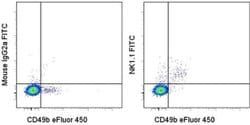
- Simultaneous staining of C57BL/6 spleen cells with PK136 and DX5 reveals coexpression of both markers by a majority of cells as well as presence of small populations of DX5+PK136- and DX5-PK136+ cells
- Applications Reported: PK136 can be used for flow cytometric analysis, immunoprecipitation, depletion of NK cells, and in vitro functional studies
- (Please use Functional Grade purified PK136, cat
- 16-5941, for functional studies.)
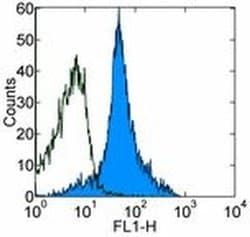
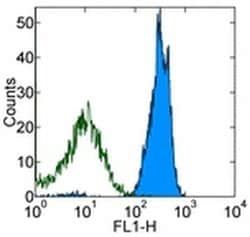
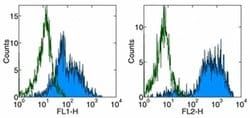
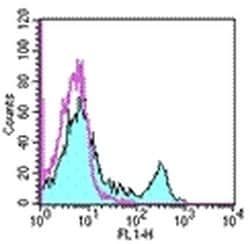
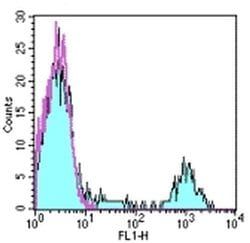
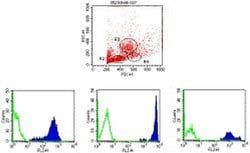
- Applications Tested: The PK136 antibody has been tested by flow cytometric analysis of C57Bl/6 mouse splenocytes and can be used at less than or equal to 0.5 μg per test
- A test is defined as the amount (μg) of antibody that will stain a cell sample in a final volume of 100 μL
- Cell number should be determined empirically but can range from 10^5 to 10^8 cells/test
- It is recommended that the antibody be carefully titrated for optimal performance in the assay of interest
- Purity: Greater than 90%, as determined by SDS-PAGE
- Aggregation: Less than 10%, as determined by HPLC
- NK1.1 (Killer cell lectin-like receptor subfamily B, member 1, KLRB1, NKR-P1A, CD161, cluster of differentiation 161), refers to Natural Killer (NK) cells, lymphocytes that mediate cytotoxicity and secrete cytokines after immune stimulation
- Several genes of the C-type lectin superfamily, including the rodent NKRP1 family of glycoproteins, are expressed by NK cells and may be involved in the regulation of NK cell function
- The KLRB1 protein contains an extracellular domain with several motifs characteristic of C-type lectins, a transmembrane domain, and a cytoplasmic domain
- The KLRB1 protein, NKR-P1A or CD161, is classified as a type II membrane protein because it has an external C terminus
- NKR-P1A, the receptor encoded by the KLRB1 gene, recognizes Lectin Like Transcript-1 (LLT1) as a functional ligand.