TNF alpha Monoclonal Antibody (MAb11), eBioscience™, Invitrogen™
Mouse Monoclonal Antibody
Manufacturer: Fischer Scientific
The price for this product is unavailable. Please request a quote
Antigen
TNF alpha
Concentration
0.5 mg/mL
Classification
Monoclonal
Form
Liquid
Regulatory Status
RUO
Formulation
PBS with 0.09% sodium azide; pH 7.2
Gene Alias
APC1 protein; Cachectin; C-domain 1; C-domain 2; cTNF; DADB-70P7.1; DIF; ICD1; ICD2; Intracellular domain 1; Intracellular domain 2; N-terminal fragment; NTF; RATTNF; Tnf; TNF alpha; TNF superfamily; TNF a; TNF, macrophage-derived; TNF, monocyte-derived; TNFA; TNF-a; TNFalpha; TNF-alpha; Tnfsf1a; TNFSF2; TNFa; TNLG1F; Tumor necrosis factor; tumor necrosis factor (TNF superfamily, member 2); tumor necrosis factor alpha; tumor necrosis factor alpha (cachetin); tumor necrosis factor alpha precursor; tumor necrosis factor ligand 1F; tumor necrosis factor ligand superfamily member 2; Tumor necrosis factor, membrane form; Tumor necrosis factor, soluble form; tumor necrosis factor-alpha; tumor necrosis factor-alpha precursor; tumor-necrosis factor; tumour necrosis factor
Gene Symbols
Tnf
Primary or Secondary
Primary
Content And Storage
4° C
Gene
Tnf
Clone
MAb11
Applications
Flow Cytometry
Conjugate
Unconjugated
Host Species
Mouse
Target Species
Human
Gene Accession No.
P01375
Gene ID (Entrez)
7124
Isotype
IgG1 κ
Purification Method
Affinity chromatography
Product Type
Antibody
Related Products


Description
- Description: The MAb11 antibody reacts with human tumor necrosis factor-alpha (TNF alpha), a 17 kDa cytokine produced by monocytes, macrophages, neutrophils, NK cells and CD4+ T cells
- TN alpha has cytolytic activity against a range of tumor cells and is important in immune regulation
- TNF alpha forms dimers and trimers and also exists as a 26 kDa membrane bound form
- The MAb11 antibody is a neutralizing antibody
- Applications Reported: MAb11 has been reported for use in detection of human TNF alpha by ELISA
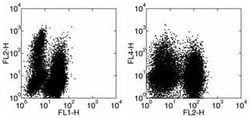
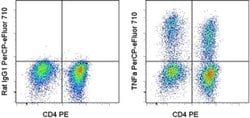
- It can also be used for intracellular flow cytometric analysis
- Applications Tested: The biotinylated format for this lot of MAb11 has been tested by sandwich ELISA for the detection of human TNF alpha in combination with MAb1 and can be used at 1 μg/mL
- It is recommended that the antibody be carefully titrated for optimal performance in the assay of interest
- Purity: Greater than 90%, as determined by SDS-PAGE
- Aggregation: Less than 10%, as determined by HPLC
- Filtration: 0.2 μm post-manufacturing filtered
- TNF alpha is a multifunctional proinflammatory cytokine that belongs to the tumor necrosis factor (TNF) superfamily
- This cytokine is mainly secreted by macrophage and bind to its receptors, TNFRSF1A/TNFR1 and TNFRSF1B/TNFBR
- TNF alpha is involved in the regulation of immune cells, cell proliferation, differentiation, apoptosis, lipid metabolism, and coagulation
- TNF alpha exists as a multimer of two, three, or five noncovalently linked units, but shows a single 17 kDa band following SDS-PAGE under non-reducing conditions
- Knockout studies in mice also suggested the neuroprotective function of TNF alpha, and has been observed to causes tumor necrosis when injected into tumor-bearing mice
- Other functions of TNF-alpha include its role in the immune response to bacterial, viral, parasitic and certain fungal infections, as well as its role in the necrosis of specific tumors
- TNF alpha causes cytolysis or cytostasis of certain transformed cells, being synergistic with interferon-gamma in its cytotoxicity
- This cytokine has been implicated in a variety of diseases, including autoimmune diseases, insulin resistance, and cancer.